
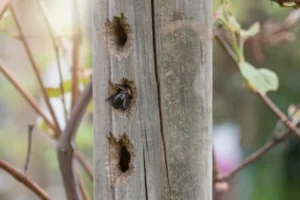
Carpenter bees are not typically aggressive, and stings are uncommon. Even so, they can still cause significant and costly damage to wooden structures around homes in Wisconsin. Because they are persistent wood-boring insects, professional carpenter bee control is often the most effective solution.
These insects tunnel into wood to create nesting chambers where they lay their eggs. The larvae develop inside the wood, feeding as they grow before emerging as adults in the fall. Our carpenter bee control services at Batzner Pest Control are designed to interrupt this cycle and protect your home from ongoing damage.
Carpenter Bees vs. Regular Bees: What’s the Difference?
At a quick glance, carpenter bees and regular bees may seem similar, but they are quite different. Each has its own behavior patterns, living preferences, and characteristics. Here are some of the primary differences between carpenter bees and regular bees:
- Nesting Habits: Carpenter bees create nests by boring into wood and forming tunnels inside structures, while regular bees typically build nests in trees, underground areas, wall cavities, or other protected spaces using wax combs.
- Temperament: Carpenter bees are known to hover around people in a territorial manner but rarely sting, while regular bees are generally non-aggressive and will only sting when they feel threatened.
- Pollination Role: Carpenter bees contribute less effectively to pollination, while regular bees are essential pollinators for flowers, crops, and a wide range of plant life.
- Social Behavior: Carpenter bees are solitary by nature and are usually seen alone or in small groups, while regular bees live in highly organized colonies that can include thousands of individuals.
Carpenter Bee Appearance: What Do They Look Like?
Several noticeable features make carpenter bees easy to distinguish from other types of bees. Their body size, coloring, and texture are helpful clues when spotting them around a home. Below are some of the main characteristics of carpenter bees:
- Size and Shape: Carpenter bees are large, robust insects with a heavy build, whereas regular bees tend to be smaller and more slender.
- Body Color: Carpenter bees may display a metallic sheen in shades of blue, green, or purple, whereas regular bees typically have more muted gold-and-black striping.
- Abdomen Texture: Carpenter bees have a smooth, glossy black abdomen with minimal to no hair, while regular bees are covered in fine fuzz over most of their bodies.
- Thorax Coloring: Both carpenter bees and regular bees have fuzzy thoraxes, but carpenter bees often feature more vivid yellow coloring in this area.
Need a pest control estimate?
Why Homeowners Choose Batzner Pest Control for Carpenter Bee Control
There are several carpenter bee control options available in Wisconsin, and we appreciate your consideration. When you choose Batzner Pest Control, you’re teaming up with a skilled group committed to safeguarding your home from carpenter bees and the costly damage they create. Here’s how we offer trusted extermination services:
- Transparent Communication: We deliver a thorough assessment of carpenter bee activity along with a clear, step-by-step breakdown of our treatment approach. We also offer practical guidance to help reduce future wood damage and remain available to address any questions or concerns.
- Customized Treatment Plans: Our carpenter bee control strategies are designed around the specific needs of your property. Following a detailed inspection, we focus on active entry points, vulnerable wood surfaces, and potential nesting areas to eliminate existing infestations and help prevent them from returning.
- Easy Online Management: Our user-friendly online platform allows you to easily schedule appointments, handle payments, and monitor service progress. Managing carpenter bee control is simple and convenient from start to finish.
- Fast Local Response: We focus on rapid response times from nearby carpenter bee control specialists who can help prevent damage from spreading further. We know that even brief delays can result in more extensive destruction and increased repair costs.
- Experienced Technicians: Our exterminators are highly trained in carpenter bee behavior and region-specific control techniques. They can identify active boring sites, understand seasonal patterns, and tell the difference between nesting and territorial activity, ensuring treatments are applied effectively and at the right time.
Our Professional Process for Carpenter Bee Control
Contacting Batzner Pest Control typically means carpenter bees are actively damaging your home and putting your property at risk. Here’s how we respond with fast elimination and lasting defense against these wood-boring pests:
- Thorough Inspection: We conduct a detailed inspection of your property to identify active carpenter bee entry points and areas that are most vulnerable to damage. We look for clean, perfectly round holes in wood, small accumulations of sawdust-like material, yellow discoloration from bee activity, and the hovering behavior of territorial males. This thorough assessment helps us gauge the severity of the infestation and determine the most effective treatment approach.
- Advanced Treatment Methods: Our precise treatment methods are designed to eliminate carpenter bees and halt ongoing structural damage. We directly treat active tunnels, target developing insects inside the wood, and apply protective barriers to high-risk areas, providing both immediate relief and long-term protection.
- Ongoing Prevention Plan: Our prevention approach is focused on reducing the likelihood of carpenter bees returning. We provide practical guidance, recommend minor structural adjustments, and share maintenance strategies that make your home less attractive to these pests, helping you avoid recurring infestations and costly repairs over time.
Expert Carpenter Bee Removal by Batzner Pest Control
DIY carpenter bee removal is often ineffective because there isn’t one nest to treat, as with other bee species. Instead, carpenter bees may be active in multiple areas around your property, and even a few missed spots can cause reinfestation in Wisconsin. That’s why professional treatment is recommended. At Batzner Pest Control, we know how to thoroughly remove carpenter bees and reduce the chance of them returning.
Call Batzner Pest Control today for fast and effective carpenter bee removal from experienced professionals.
Frequently Asked Questions: Carpenter Bees and Removal
Since 1946, we’ve been proudly serving Wisconsin and have become a trusted leader in pest control by removing countless carpenter bee infestations. We’re committed to protecting homes from the structural damage and repair costs these pests can create.
Over time, our field experience has given us valuable insight into carpenter bees, and we’re happy to share that knowledge. From identifying infestations to understanding long-term risks, we’ve got you covered.
And if your question isn’t answered here, don’t hesitate to contact us.
How serious is carpenter bee damage?
A single carpenter bee may only make a small entry hole, but the damage increases as more bees return over time. They often reuse and expand existing tunnels, creating larger networks inside the wood. This repeated activity can weaken structural areas like beams, decks, and trim, often resulting in repair costs far greater than professional treatment.
If there are bees hovering but no holes, is it still worth getting help?
Yes. Hovering carpenter bees, especially males, often indicate nearby or hidden nesting activity. Females may already be boring into wood where damage is not yet visible. A professional inspection can help identify early activity before signs like sawdust piles appear.
Will DIY foam sprays work on carpenter bee holes?
DIY foams and sprays often fail to fully resolve the issue because carpenter bees do not rely on a single, simple nest. If even one tunnel or deeper chamber is missed, the infestation can continue into future seasons. Professional treatments are designed to reach deeper into the wood and provide more complete, longer-lasting control.
Can painting my deck protect it from carpenter bees?
Painting or staining wood may help reduce attraction, but it does not guarantee prevention. Carpenter bees can still bore into painted surfaces, particularly in areas where they have nested before. Once a site is established, they may continue targeting it regardless of the finish.
Will carpenter bee infestations go away without treatment?
No, carpenter bees typically do not leave established nesting sites on their own. Once a tunnel is created, it is often reused and expanded over time, especially by future generations. Without treatment, the activity usually increases each year as the infestation grows.
