
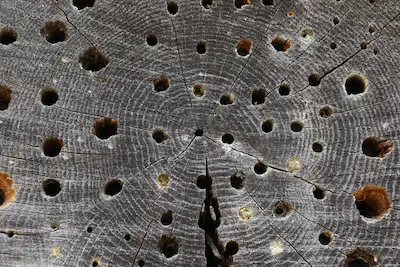
 Those large bees hovering near the decks, porches, and fences around your home in Wisconsin? They’re likely carpenter bees. Active during spring and early summer, they carve tunnels in untreated wood to nest. You might even spot piles of coarse sawdust beneath the holes they create, a clear sign of their activity. Unlike honeybees, they don’t form colonies and seldom act aggressively. Male carpenter bees can’t sting, and females usually won’t unless threatened, but their damage is easy to recognize.
Batzner Pest Control specializes in controlling carpenter bee problems before they cause serious harm. Our experienced technicians pinpoint activity, apply targeted treatments, and help protect your wood structures from future infestations.
How Much Damage Can Carpenter Bees Do?
When carpenter bees return year after year to bore into your wood, they can seriously weaken your property. What may seem like small damage at first can quickly escalate. Over time, this structural wear can lead to:
- Weakened Railings: Porch and balcony railings are frequent targets for carpenter bees. As they tunnel into the wood, the railings gradually lose their sturdiness and support, raising the risk of collapse and possible injury if left unrepaired.
- Damaged Steps: When carpenter bees infest wooden steps, they slowly hollow them out from within. Over time, this weakens the structure, and the steps may crack or give way, posing a safety hazard much like loose or unstable railings.
- Compromised Support Beams: Carpenter bees boring into structural beams can slowly erode the integrity of your home’s framework. Without timely treatment, this can cause warping or partial collapse, though visible warning signs often appear before severe damage sets in.
- Distinct Entry Holes: Carpenter bee holes are easily recognized by their smooth, round shape, about the size of a nickel. These openings typically appear in exposed wood such as rafters, eaves, or under decks, where bees begin their nesting tunnels.
- Visible Wood Damage: Evidence of carpenter bee activity often includes small grooves, dashes, or round marks etched into the surface of the wood. Since these bees don’t cover their work like termites do, the markings remain visible and serve as a clear indicator of infestation.
Carpenter bees can quickly damage your property if ignored. Call a bee, wasp, and hornet exterminator at the first sign of trouble. Our trained professionals apply the latest techniques to eliminate these insects safely and keep your home protected from future infestations. We’re here to help whenever you need support.