

Key Takeaways:
- Physical exclusion serves as the primary line of defense by blocking micro-gaps before rodents can establish a foothold inside your home.
- Tailoring your prevention strategy to specific pest behaviors is crucial, as climbing mice and burrowing rats exploit vastly different entry points and materials.
- Comprehensive perimeter protection requires managing environmental attractants like landscape buffers, woodpile placement, and specialized exterior lighting.
- Identifying early subtle warning signs is vital because indoor breeding cycles escalate far too quickly for basic traps to keep pace.
Wisconsin Rodent Prevention: Protection Tips & Exclusion for Local Homes
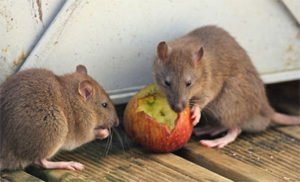 A rodent doesn’t need an open door to invade your home—a gap the size of a dime is all it takes. While infestations spike during the sharp autumn freeze across Milwaukee, Madison, Oshkosh, and New Berlin, mice and rats are a year-round threat to Wisconsin properties. The best defense isn’t setting traps after they’re inside; it’s locking them out before they ever cross your perimeter.
Below, you’ll find a complete, step-by-step prevention guide to protect your Wisconsin home. We’ll cover actionable exterior and interior proofing checklists, the key behavioral differences between mouse and rat prevention, how to identify the specific rodent species invading your space, and when it’s time to call in professional exterminators.
How Does Exclusion Prevent Rodents?
Exclusion is the practice of physically sealing and modifying a home to keep pests from getting inside. While trapping or baiting handles pests after they invade, exclusion focuses on defense. It blocks physical gaps, upgrades weak building materials, and cuts off access pathways like tree limbs or food attractants.
The goals of these tips are to:
- Deny Physical Entry: Seal gaps and utility penetrations with durable, rodent-proof materials such as copper mesh, steel wool, hardware cloth, and hydraulic cement.
- Cut Off Access Corridors: Eliminate roofline pathways, soffit gaps, and overgrown climbing routes.
- Remove Perimeter Lures: Eliminate exterior food sources, standing water, nocturnal insect lighting, and harborage spots near your foundation.
Need a pest control estimate?
We'll call you! Our representatives are fast and friendly.
Exterior & Perimeter Exclusion Checklist
- Seal Foundation & Utility Access Points: Inspect exterior foundation walls, siding transitions, rim joists, and utility penetrations (gas lines, AC conduits, outdoor spigots). Stuff small gaps with heavy-gauge, non-rusting copper mesh or stainless steel wool, then permanently cap them with a high-grade elastomeric sealant, silicone, or hydraulic cement.
- Install Permanent Structural Barriers: For larger gaps, foundation cracks, structural decay, or broad openings, skip expanding foam alone—rodents easily chew through it. Install rigid 1/4-inch hardware cloth, heavy aluminum flashing, or pour fresh concrete to block structural voids.
- Secure Rooflines, Soffits & Elevated Vents: Deer mice are natural climbers that exploit elevated structural vulnerabilities. Inspect roof dormers, ridge vents, soffit joints, fascia boards, and openings around rooftop HVAC units. Secure all attic and crawl space ventilation gaps with 1/4-inch wire mesh screens or stainless steel vent covers.
- Upgrade Exterior Lighting Systems: Standard incandescent and high-intensity exterior lights attract swarms of nocturnal insects, creating a rich feeding ground that lures rodents directly to your foundation. Switch exterior fixture bulbs to yellow sodium vapor or LED lights rated above 550 nm to minimize pest attraction.
- Optimize Perimeter Landscaping & Clear Zones: Trim tree branches back at least six feet from your roofline to eliminate natural jumping platforms. Create a clean 2-foot gravel or clear buffer strip around the foundation, keeping low shrubs, tall grass, and decorative plantings cut back. Store firewood piles, unused building materials, and compost bins on elevated racks at least 20 feet away from the home.
Actionable Interior & Structural Protection Checklist
- Secure Entry Thresholds & Garage Doors: Install heavy-duty rubber door sweeps on all exterior doors, basement entryways, and attached garage doors. Attached garages are primary entry corridors; ensure bottom weather-stripping forms a completely flush seal against the concrete to block gaps larger than a dime.
- Seal Plumbing, Drains & P-Traps: Ensure all household plumbing p-traps contain water to prevent sewer-dwelling Norway rats from climbing up municipal lines into basements or bathroom fixtures. Seal gaps around drainpipes where they pass through wall voids using metal escutcheon plates, steel wool, and silicone.
- Contain Food & Pet Supplies: Store dry goods, cereal, birdseed, and pet food in heavy glass, metal, or thick plastic containers with airtight seals. Avoid leaving pet food bowls out overnight, and clean up kitchen crumbs and grease spills beneath appliances daily.
- Eliminate Interior Moisture & Harborages: Use dehumidifiers in damp basements, crawl spaces, and attics to eliminate ambient moisture. Remove cardboard storage boxes—which provide ideal nesting material—and replace them with sealed plastic totes off the floor.
Wondering if sonic devices or store-bought sprays actually work? Read our guide on which rodent repellents are most effective.
Is There Any Difference Between Mouse and Rat Prevention?
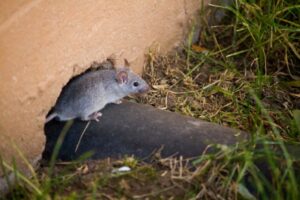
While the core principles of rodent exclusion — sealing openings, managing food sources, and eliminating shelter — apply across the board, understanding the behavioral differences between mice and rats helps you refine your strategy:
- Entry Size & Access Points: Mice require significantly smaller gaps to invade your home. A house mouse can squeeze through a gap the size of a dime (1/4 inch), requiring meticulous sealing of micro-cracks around siding, vents, and utility lines. Rats need an opening roughly the size of a quarter (1/2 inch or larger), but their powerful jaws allow them to actively gnaw through soft materials like wood, rubber, plastic, and low-grade expanding foam to enlarge minor openings.
- Climbing vs. Subterranean Burrowing: Mice—especially deer mice—are exceptional climbers that exploit elevated entry points such as rooflines, soffits, dormers, and utility cables. Rat prevention, particularly for the Norway rats common in Wisconsin, requires a heavier focus on lower-level defenses. Norway rats are powerful burrowers that dig along foundations, beneath concrete slabs, and through subterranean sewer runs.
- Neophobia (Fear of New Objects): Mice are naturally curious and tend to explore new traps, sealants, or changes in their environment quickly. Rats exhibit extreme neophobia, meaning they are cautious and suspicious of newly placed exclusion barriers or traps. Effective rat prevention requires robust, permanent physical barriers that leave no room for trial-and-error testing.
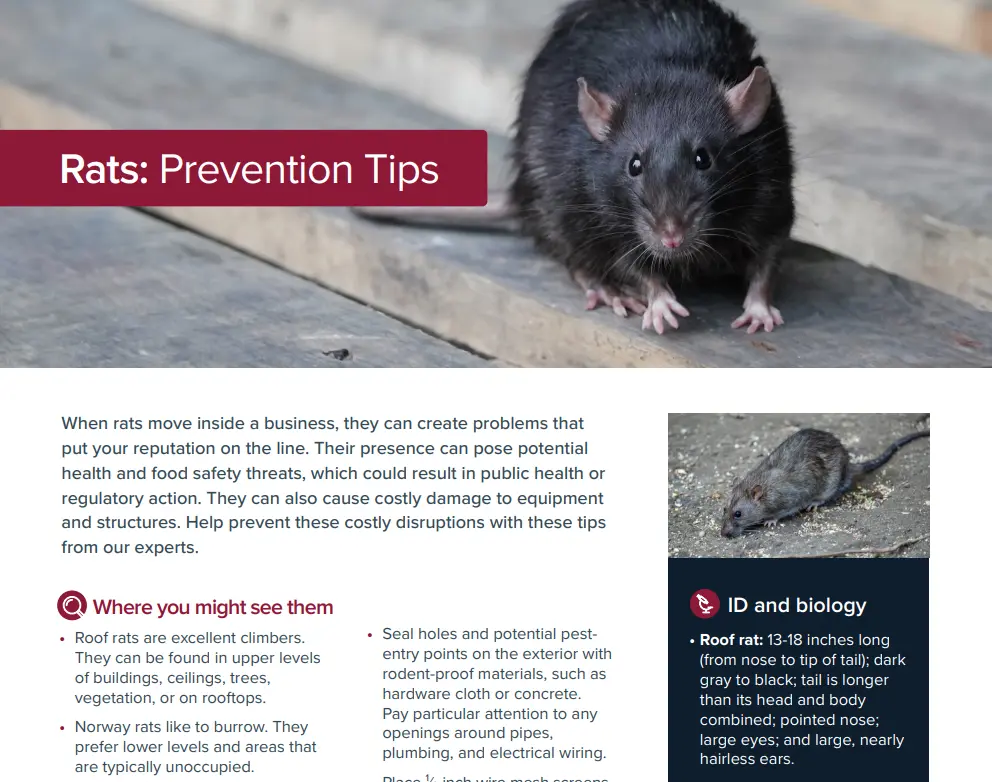
Rats: Prevention Tips
Rats can harm your reputation and create health and food safety risks, leading to regulatory actions. They also cause expensive equipment damage. Protect your business with these expert tips.
Download Your Copy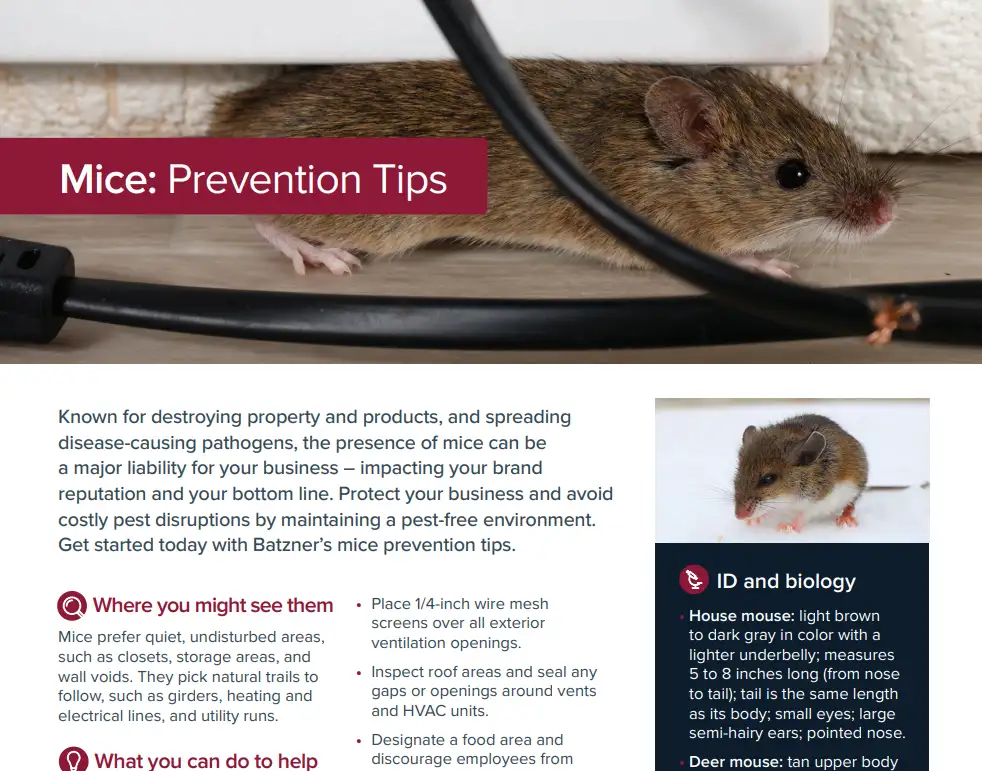
Mice: Prevention Tips
Mice can destroy property and products, and their potential to spread harmful pathogens makes them a serious threat to your business. To safeguard your brand and reduce the likelihood of costly pest interruptions, follow these essential mice prevention strategies.
Download Your CopyUnderstanding Wisconsin’s Rodent Threats
Wisconsin has three main indoor rodent threats: Deer Mice, House Mice, and Norway Rats. Identifying which species is attempting to enter your home helps pinpoint specific entry points and structural vulnerabilities:
| Species | Primary Entry & Nesting Zones | Key Behavioral Traits | Reproductive Rate |
| House Mouse
(Mus musculus) |
Wall voids, cabinets, soffits, and utility runs near heat sources. | Squeezes through gaps as small as a dime (1/4″); follows conduits and electrical lines. | Up to 8 litters/year
(5–6 pups per litter) |
| Deer Mouse
(Peromyscus maniculatus) |
Attics, rafters, drop ceilings, and upper-level rooflines. | Expert climber and jumper; primary regional vector for Hantavirus. | Up to 4–5 litters/year
(3–5 pups per litter) |
| Norway Rat
(Rattus norvegicus) |
Basements, crawl spaces, foundation burrows, and sewer lines. | Subterranean burrower (tunnels 6–7 ft deep); gnaws through wood, rubber, and soft plastic. | Up to 7 litters/year
(8–12 pups per litter) |
Key Signs of an Active Rodent Infestation
Rats and mice are nocturnal and elusive, so there’s a good chance you may spot these rodent warning signs before seeing an actual animal:
- Droppings: Mouse droppings are small (1/8 to 1/4 inch) with pointed ends. Rat droppings are significantly larger (1/2 to 3/4 inch), capsule-shaped, and feature blunt ends. Fresh droppings are dark and shiny, while older droppings appear dull and gray.
- Gnaw Marks & Damaged Insulation: Look for fresh chew marks on baseboards, door frames, electrical wiring, and food packaging. In attics, look for compressed insulation or carved tunnels through fiberglass batts.
- Grease Rubs: Rats and mice leave dark, oily rub marks along baseboards, joists, and pipe runs caused by the natural oils and dirt in their fur as they travel along established trails.
- Nocturnal Sounds & Pet Behavior: Scratching, scampering, or squeaking noises inside wall voids or above ceilings at night—along with pets persistently sniffing or barking at cabinet bases or baseboards—often indicate an active nest.
When to Call Professional Exterminators
While preventive exclusion work protects your home’s exterior shell, active infestations inside wall voids or beneath foundation slabs require professional rodent control. DIY traps rarely catch an entire breeding population before female rodents reproduce.
If you discover active droppings, hear scratching inside your walls, or notice structural gnawing around utility lines, our experienced team can help. Batzner Pest Control provides comprehensive rodent removal, localized trapping, and permanent wildlife and rodent exclusion services tailored specifically to Wisconsin homes. Contact us today for a free service quote!
Back to Rodent Exterminators – Rat & Mice Exterminators


