Honey Bee

Honeybee identification in Wisconsin - New Berlin, Green Bay, Milwaukee, Madison, Racine and surrounding areas

Honey Bees in Wisconsin

Honey bees mainly feed on pollen and nectar collected from blooming flowers. These bees are active pollinators that, true to name, produce honey. Their colonies can survive for years. Queen honey bees are slightly larger than male honey bees, also known as drones. They are found all over the nation and pollinate more than 100 types of crops.

Honey bee colonies often contain anywhere from 20,000 to 60,000 members at any given time. Operating according to a caste system, honey bees each perform a specific role in the colony. The two main types are Africanized honey bees and European honey bees. The latter is much more aggressive than the former. Honey bees will swarm when the colony becomes too large for its hive.

Honey Bee Habitat & Nests

Honey bees can thrive in natural or domesticated environments, though they prefer to live in gardens, woodlands, orchards, meadows, and other areas where flowering plants are abundant. Within their natural habitat, honey bees build nests inside tree cavities, rock crevices, and under edges of objects to hide from predators. They can also be found in chimneys, wall cavities, or roof spaces. They make their nests out of wax secreted from the abdominal glands of the worker honey bees. Workers sweep up a few flakes of wax from their abdomens chewing them until the wax becomes soft enough to mold into cells to form the hive.

Honey Bee Behaviors & Dangers

Even though they are not aggressive or sting unless they feel threatened, most people still associate the insects with stings. When a honey bee stings, the stinger, venom sac, and other parts of the bee become detached from the body, which causes them to die. Since the glands associated with the venom sac continue to pump venom into the victim even after the bee dies, the stinger should be removed immediately. Though painful, honey bee stings are only dangerous to people with bee allergies.

In addition to posing the threat of stinging, honey bees can damage homes and other structures when they build nests in wall cavities. As the nests expand over time, the size and presence of both honey and beeswax may cause the surrounding plaster and drywall to sag or become stained. If you notice a honey bee problem forming in or near your property, always contact your local bee control experts.

Mud Dauber

Mud dauber control at Batzner Pest Control in Wisconsin - Serving New Berlin, Green Bay, Milwaukee, Madison, Racine and surrounding areas

Mud Daubers in Wisconsin

Mud daubers are solitary wasps that construct small nests of mud in or around homes, sheds, and barns and under open structures, bridges, and similar sites. These wasps are long and slender with a narrow, thread-like waist. Mud daubers are solitary wasps, meaning they are not social and do not live in colonies. They pass through four stages during their life cycle – egg, larvae, pupae, and adult. Depending on the species, they complete one or two generations per year. In the spring, overwintering pupae develop into the adult. Mud daubers are not aggressive and typically do not sting unless their nest is directly threatened.

Mud Dauber Habitat & Nests

Carrying a ball of wet mud back to the nest site in her mandibles, the female mud wasp delicately crafts cells made to hold her eggs. Many short mud tubes, usually about 1″ long, are constructed side by side. Nests are usually built in sheltered sites protected from the rain, such as under eaves, porch ceilings, garages, sheds, barns, and attics. The nests may also be found stuck to the walls of buildings or the sides of equipment. After the female constructs the chambers, she captures and paralyzes spiders to place in the cells as larval food. An egg is laid in each cell, and it is sealed. When nests appear to have round holes on the outside, this is an indication the wasps have emerged and the nest is inactive.

Mud Dauber Behaviors & Dangers

Because they are solitary wasps, mud daubers are not aggressive and do not defend their nest the way social wasps, like hornets and yellow jackets, do. In fact, mud daubers are very unlikely to sting, even when thoroughly disrupted. Although mud daubers generally aren’t dangerous or destructive, they can become a nuisance if they choose to build a nest under your eaves, on your porch, under your patio cover, or in a garage or shed on your property. They are actually beneficial as they help control spiders.

If mud dauber activity is occurring near your property, always contact your local wasp control company.

Paper Wasp

Paper wasp control at Batzner Pest Control in Wisconsin - Serving New Berlin, Green Bay, Milwaukee, Madison, Racine and surrounding areas

Paper Wasps in Wisconsin

There are over 22 species of paper wasps in the U.S., and most of them are brownish in color with yellow markings. Paper wasps are a common nuisance for homeowners due to their fondness for building their nests in the yards of homes. They are sometimes called umbrella wasps, after the shape of their distinctive nests. Adult paper wasps are typically brownish with yellow markings, although a few species have red markings. Adults feed on plant nectar and honeydew. Larvae are fed insects, including caterpillars, flies, and beetle larvae.

Paper Wasp Habitat & Nests

Paper wasps are often identified by their open, exposed nests that resemble an upside-down umbrella. These nests can get quite large late in the season, and adult wasps will readily sting if they sense danger approaching. Paper wasp nests are built by overwintering queens in the fall to survive the winter. Supported by a single stalk, the comb nests are constructed of a paper-like material, made by combing plant fibers with saliva to make water-resistant nests. Each tier is not enclosed by a paper cover.

Nests are constructed in protected locations such as under and within the eaves of structures, in attics and wall voids, and in many other enclosed areas. Some of the more notable locations to encounter nests include exterior lighting fixtures, parking meters, bird boxes, trees, vents, fences, window or door frames, and infrequently used equipment like gas grills, motor homes, and boats.

Paper Wasp Behaviors & Dangers

Similar to mud daubers, paper wasps are considered to be beneficial to the environment for keeping the insect population under control. They also assist in pollination by feeding on nectar. However, paper wasps are considered aggressive and have been known to sting repeatedly when threatened. For this reason, it’s important to never disturb their nest. Stings can be extremely painful, which is why you should leave it up to a wasp control company to deal with paper wasp infestations in or near your home.

Yellowjacket

graphic of a yellow jacket shows what these stinging insects look like up close

Yellowjackets in Wisconsin

Yellowjackets are aggressive stinging insects that are commonly encountered in the summer and fall. The coloration varies by species, but the most commonly encountered yellowjackets typically have abdomens that are banded with yellow and black. Their legs are yellow in color. They feed on insects including caterpillars, flies, and other flying insects. As colonies increase, they are attracted to sweet foods consumed by humans. These beneficial wasps live in colonies with thousands of individuals and would be a lesser threat to humans were it not for their opportunistic behavior of nesting in structural voids, attics, and cavities associated with landscaping features.

Yellowjacket Habitat & Nests

Yellowjackets can be found anywhere humans are found, and nests are constructed of layers of comb made of tiny bits of wood fiber chewed into a paper-like pulp. Yellowjacket nests can be found in many different places in or around a home, including the ground, hollow trees, shrubs, bushes, or internally in attics, hollow walls or flooring, sheds, under porches, or eaves of buildings. Unlike paper wasps who only build their nests above ground, yellowjackets will build both aerial and underground nesting sites. When disturbed, yellowjackets are quite aggressive and can attack in large numbers.

Yellowjacket Behaviors & Dangers

Yellowjackets are slow to sting unless their nest is threatened. However, yellowjacket stings pose a more serious threat to humans than bees, because a yellowjackets stinger is not barbed like a honey bee, allowing it to sting repeatedly. Some individuals are more sensitive than others, due to allergic reactions, and should seek medical attention when stung.

Sometimes yellowjackets living in wall voids chew their way through the drywall and enter the structure’s living space. Naturally, the presence of large numbers of wasps flying around the room can be alarming to homeowners. If you notice a yellowjacket problem in or near your Wisconsin home, always contact your local wasp removal experts.

Muskrat

Muskrat control at Batzner Pest Control in Wisconsin - Serving New Berlin, Green Bay, Milwaukee, Madison, Racine and surrounding areas

Fast Facts

Color Typically dark brown in color, muskrats have dense coats that are mostly waterproof and covered in coarse hairs.
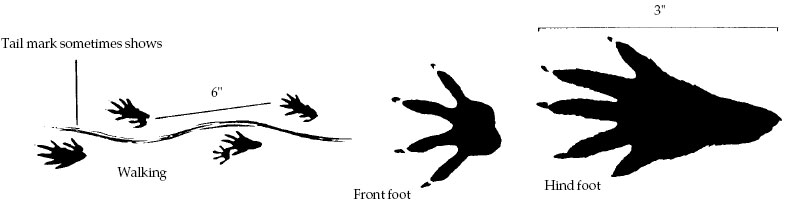
Size Adults weigh between two to five pounds and are 16 -25″ long. Muskrat tracks are small with long, finger-like toes. The rear print is 2-3″ long and may look like a smaller version of a raccoon track. Although they have five toes, often the front print appears four-toed because the inner toe is extremely small and barely shows in the track.muskrat footprints
Appearance Muskrats are often confused with the beaver, but they are much smaller with silky brown fur and have a long, thin tail instead of a wide, flat tail like a beaver. Other distinguishing features include small eyes and ears, short front legs with claws for digging, and longer hind legs with partially webbed feet that help the animal swim.

Muskrat Diet

Muskrats primarily eat aquatic vegetation like bulrushes and cattails, though they will also eat fruits and vegetables. A small part of their diet is shellfish, snails, fish, and frogs, and these are generally consumed when plant foods are scarce.

Muskrat Habitat

Muskrats prefer living in areas with consistent sources of shallow water, including ponds, swamps, slow-moving streams, marshes, and other wetlands. They burrow into the banks of ponds or streams, constructing dens that typically have at least one underwater entrance and are made of aquatic plants and mud.

Muskrat Life Cycle

After a 30-day gestation period, females give birth to two or three litters per year with each litter averaging four to eight pups. The size of the litter varies with the seasons; larger litters born in spring and summer and smaller litters born in winter. Newborn muskrats are weaned for about a year before they become independent.

Muskrat Damage & Signs of an Infestation

The majority of muskrat damage is done to the ecosystems in which they live because their feeding habits cause deterioration of available food sources for other species. Additionally, the animal’s preference for building dens on the banks of waterways can affect existing dams. Homeowners that plant gardens near muskrat habitats can experience loss of crops.

Tracks

The footprints appear with four toes in the front and five in the back with visible claws marks. There is often a visible tail mark in between the footprints. Muskrat tracks can be found in mud or sand along shorelines.

Droppings

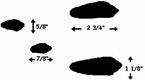
You may notice muskrat droppings on dry, elevated surfaces such as stumps, logs, rocks, feeding sites, or floating in the water. Droppings are dark green, brown, or almost black. They are slightly curved, cylindrical, and about 1/2″ long and 3/8″ in diameter.

Feeding Platforms

Feed sites are elevated, flat pads of mud, and compacted vegetation. Feeding huts look like small lodges about one foot above the water level and are hollow inside.

Lodges

Muskrat dens are made with piles of mud and aquatic vegetation, up to eight feet in width and five feet tall.

Waterway Issues

Waterways will show the presence of muskrats with leaking ponds or dams or collapsed banks due to extensive burrowing.

Muskrat Prevention & Control

Muskrat Prevention

Habitat modifications can be implemented to discourage muskrats from living in certain areas. Managing slopes and water levels, trimming overgrown vegetation, and installing barriers help prevent muskrats from burrowing into pond embankments. Fencing around gardens and picking up fallen fruit will also discourage muskrats from using your yard to obtain food.

Muskrat Control

Much of wildlife control is knowing and understanding the habitat and behavior of the animal. For muskrats, Batzner uses live trapping with fresh vegetables, carrots, or apples.

If you’re having problems with muskrats around your home or business, contact a pest control professional for expert removal services.

Opossum

Opossum identification in Wisconsin - New Berlin, Green Bay, Milwaukee, Madison, Racine and surrounding areas

Opossum Diet

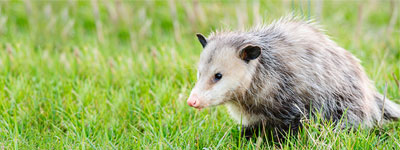
The diet of the opossum is very adaptable to the environment they find themselves in, making them opportunistic eaters. If it smells good and is easily accessible, they will eat it. Opossums eat anything from insects, fruit, plants, slugs, snails, rats, mice, frogs, crayfish, and carrion, as well as pet food or food, left unsecured in garbage cans.

Opossum Habitat

Opossums are not picky when it comes to their habitat, found anywhere from open woods, brushy shrublands, farmlands, parks, suburbs, and even in urban areas. They may occupy abandoned dens of other species, or live in hollow logs, tree holes, under porches, or in crawl spaces. No matter where they are, there will always be a reliable water supply nearby.

Opossum control and removal - Batzner Pest Control in Wisconsin

Opossum Life Cycle

Opossums are solitary animals except during their breeding season, which occurs between February and August. A female reaches sexual maturity by one year of age. After its first year, the female opossum is capable of having up to two litters of 8-14 young. After 12 to 13 days of gestation, the tiny newborns crawl up into their mother’s fur-lined pouch where they will be nurtured by her mammary secretions. The young remain in the pouch for eight or nine weeks while they grow at a fast rate. By 14 weeks of age, the young opossums are weaned and are left to fend for themselves.

Opossum Damage & Disease

Although an opossum has a relatively fearsome face and bears some resemblance to rats with their long tails, they are not generally dangerous. They also rarely carry rabies, which is a common concern, especially for pet owners. They can bite and defend themselves, but they are not considered much of a threat.

Disease

There are only a few diseases that are associated with opossums. They tend to have lower incidents of rabies than other wildlife pests, but they might carry: Leptospirosis, Tuberculosis, Relapsing fever, Tularemia, Spotted fever, Toxoplasmosis. Several of these actually come from the parasites that opossums carry with them, and can become serious.

Home Damage

Opossums are very opportunistic. If there is already a hole in the roof, they might use it to get into attics, but they will rarely dig or chew those holes themselves.

Lawn Damage

They might dig in your lawn looking for grubs and other insects that lurk just below the surface level.

Opossum Prevention & Control

Opossum Prevention

Like many pests, the best way to get rid of them is to make changes to your home and property so that opossums do not find your home attractive. This means doing things like:

  • Removing vegetation and debris from your property to remove hiding places.
  • Securing lids on garbage cans and containers.
  • Bringing pet food inside.
  • Making sure that holes and entry points around your home are secured.
  • Trimming the trees around your home. Opossums are excellent climbers and will use trees to get onto your roof.
  • Sealing up areas beneath your deck or porch to eliminate places for them to hide.
Opossum Control

Much of wildlife control is knowing and understanding the habitat and behavior of the animal. Opossums are transient animals, and typically move on after a couple of days. If necessary, live trapping can be done with canned cat food or apples.

If you’re having problems with opossums around your home or business, contact a pest control professional for expert removal services.

Rabbit

Rabbit control at Batzner Pest Control in Wisconsin - Serving New Berlin, Green Bay, Milwaukee, Madison, Racine and surrounding areas

Fast Facts

Color Rabbits range in color from a light brown to a darker gray.
Size rabbit-footprints

Adults are between 14-18″ long, and weigh up to four pounds. Rabbit tracks are under 1″ in the front and around 3″ in the back. The big rear feet hit the ground in front of the two small front feet as the rabbit moves, leaving a trail that looks like a series of “C”s or “V”s made by the feet.

Appearance The rabbit’s long ears give it the ability to hear noises from all directions, helping them hear predators coming.

Rabbit Diet

The diet of the rabbit includes vegetation, veggies, grass, herbs, buds, sprouts, and shoots of woody plants including, alfalfa, clover, peas, beans, and grass.

Rabbit Habitat

Rabbits usually place their nests in plain view, sometimes in the middle of a yard, brush piles, or long grass with fur over and around the nest. Other places include wooded, thick brush areas, farmland, orchards, back yards, or hollow logs.

Rabbit Life Cycle

Mating occurs from February to August. The female makes a nest by scraping out a shallow depression in the ground and lining it with grass and her own fur. Females are able to mate almost immediately after giving birth, which allows them to have two to three litters per year with three to six young in each. Young cottontails are born naked, blind, and almost totally helpless, weighing only about one ounce and measuring just four inches in length. They get very little attention from their mother, as she only returns occasionally to the nest to nurse them, but they develop rapidly. Their eyes are open at two weeks, and at four or five weeks, they are weaned and independent. The life expectancy is four to six months old in the wild.

Rabbit Damage & Disease

The most damage rabbits cause is eating out of gardens and destroying yards with digging. In regards to diseases, rabbits can be infested by a number of parasites, including ticks and mites.

Rabbit Prevention & Control

Rabbit Prevention

Like many pests, the best way to get rid of them is to make changes to your home and property to eliminate hiding places for rabbits. This means doing things like:

  • Removing brush piles, weed patches, stone piles, and other debris.
  • Sealing up areas beneath your deck or porch.
Rabbit Control

Much of wildlife control is knowing and understanding the habitat and behavior of the animal. For rabbits, Batzner uses live trapping with brussel sprouts, carrots, and lettuce.

If you’re having problems with rabbits around your home or business, contact a pest control professional for expert removal services.

Skunk

Skunk control at Batzner Pest Control in Wisconsin - Serving New Berlin, Green Bay, Milwaukee, Madison, Racine and surrounding areas

Skunk Diet

Skunks feed on small mammals, eggs, fruit, berries, insects, food scraps in the trash, dog feces, farm poultry, and eggs.

Skunk Habitat

Skunk habitats vary from pastures to open lands bordering forests. They will also live under decks, under sheds, or in burrows, hollow logs, or wood or rock piles. Skunks do not hibernate but generally remain inactive during winter, surviving on their fat stores and only leaving their den for short periods during warm weather.

Skunk control and removal - Batzner Pest Control in Wisconsin

Skunk Life Cycle

One male may breed with several females during February and March. After mating, female skunks move to a maternal den using grass for bedding. Generally, four to seven young are born about nine weeks after mating in May or June. The young are blind and deaf at birth with short, fine fur. The young are nursed in the den for about six weeks before joining their mother on trips outside the den. By this time, they are miniature replicas of adults. The young are weaned by about two months of age.

Skunk Damage

Spray People and Pets

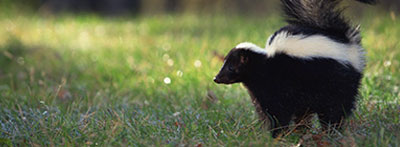
When feeling threatened, a skunk will spray people or pets with an oily liquid containing sulfur compounds that are produced by two glands at the base of the tail. Skunks are capable of spraying accurately up to 20 feet. The spray can be painful and blind pets and people temporarily.

Carry Rabies

Skunks are also a serious public health threat. In the U.S., they are second to the raccoon in the number of reported rabies cases among wildlife animals.

Inhabit Structures

Skunks will often dig along the edges of structures and take up residency beneath foundations, porches, decks, and sheds.

Damage Lawns

Skunks are known to tear up lawns and landscaping as they dig for insect larvae.

Raid Gardens

Unfenced gardens are commonly raided by skunks for fruits and vegetables.

Damage Beehives

Skunks will feed on both adult and larval bees.

Skunk Prevention & Control

Skunk Prevention

Like many pests, the most effective way to make your property less attractive to skunks is to reduce access to the food, water, and shelter that the animals need. Minimize sources of these close to your property by:

  • Removing brush piles, weed patches, stone piles, and other debris.
  • Fallen fruit and spilled seed from bird feeders should be removed frequently.
  • Garbage cans should have tight-fitting lids.
  • Food placed outdoors for pets should be removed by nightfall.
  • Close off all potential entrances or openings under houses and decks, garden tool sheds, mobile homes, porches, and decks with 1/4″ mesh hardware cloth. The advantage of using the small mesh is that it will also exclude rats and house mice if installed correctly. Skunks will work hard to get into a desirable den space, so take care to make fittings good and tight. If there is soil underneath the potential entrances, bury the wire at least six inches to discourage skunks from digging under.
Skunk Control

Much of wildlife control is knowing and understanding the habitat and behavior of the animal. For skunks, Batzner uses live trapping and/or covered trapping baited with cat food, chicken entrails, or sardines with brussel sprouts, carrots, or lettuce.

If you’re having problems with skunks around your home or business, contact a pest control professional for expert removal services.

Squirrel

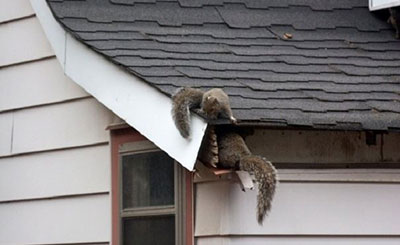
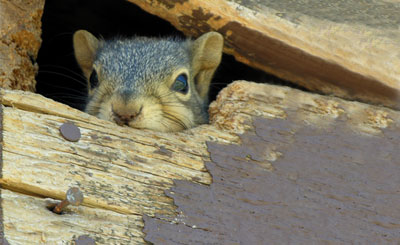
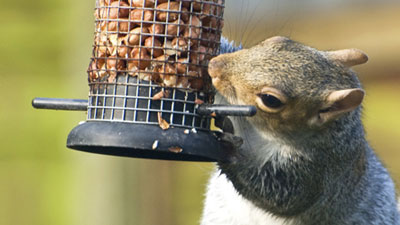
Squirrel control at Batzner Pest Control in Wisconsin - Serving New Berlin, Green Bay, Milwaukee, Madison, Racine and surrounding areas

Squirrel control and removal services - Batzner Pest Control in Wisconsin
Squirrel prevention and removal services - Batzner Pest Control in Wisconsin

Squirrel Diet

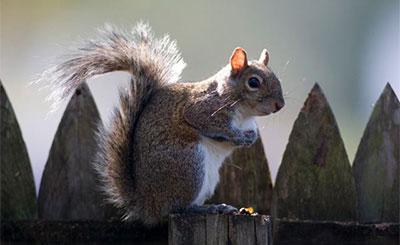
Generally, squirrels feed on tree bark, seeds, walnuts, acorns, other kinds of nuts, and the various fungi that are found in the forest region. They are an opportunist in searching for food, and therefore can adapt to a wide variety of habitats. Squirrels change their diet based on the current season and eat whatever is available. They feed on buds of hardwood trees in spring, winged seeds of maple in summer, along with some other berries and other wild fruits. During autumn, their diet comprises mostly of hard nuts, hickory nuts, beechnuts, pine seeds, and butternuts. During this time of year, they are also working hard to stock up their supplies for winter.

Squirrel prevention and removal services - Batzner Pest Control in Wisconsin

Squirrel Habitat

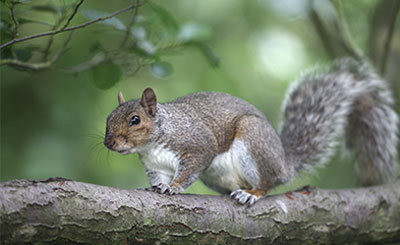
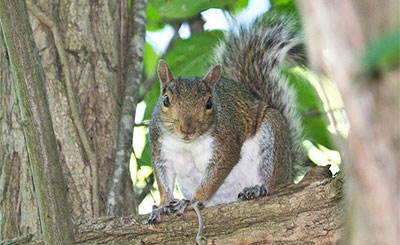
Often seen scampering from branch to branch, squirrels are seen in all kinds of environments, including parks, neighborhoods and wooded areas. The ideal habitat for a squirrel has an abundance of nut-producing trees and a diverse selection of other food sources available during different seasons. Gray squirrels live in two types of dwelling structures:

  1. Dens: Holes typically constructed in healthy, living trees. Sometimes, these tree cavities are used as nests for raising young.
  2. Nests: Densely packed masses of sticks and leaves. Nests are usually located high up in the forked branches of large trees.

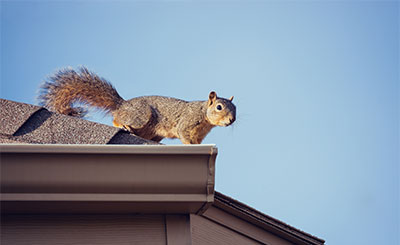
Dens are preferred for over-wintering and for raising young, but with constant maintenance, nests are very weatherproof and sturdy. Looking for warmth during the coldest months of the year, squirrels are known for seeking shelter in human structures, including attics and exterior walls, using insulation as nesting material.

Squirrel Life Cycle

Gray squirrels breed in mid-December or early January and again in June if food is very abundant. Most females begin their reproductive life at one year old. Males usually are sexually mature by 11 months, but maturity can be delayed by as much as two years if the young males are around a dominant adult male. During the breeding season, noisy mating chases take place when one or more males pursue a female through the trees. When not breeding, the gray squirrel is solitary. Pregnancy lasts about 44 days with one to eight pups in each litter. The young are cared for by the mother and are weaned after they are two months old.

Only 25% of gray squirrels survive their first year. The survival rate remains quite low for the first two years of life. If a squirrel makes it past two years, it has a high survival rate for another four of five years. It is unlikely for a squirrel to live past 10 years due to the impact of disease and debilitation (tooth loss, cataracts, and parasites) slowing them down just enough to compromise their ability to survive. An average squirrel has an average life expectancy of three years.

Squirrel Diseases

The gray squirrel is a host to many diseases and parasites, including lice, worms, and ticks.

Squirrel Damages

Inhabit Structures

Squirrels generally inhabit wooded areas and nest in trees, but will frequently establish themselves in attics or garages, where they’ll store their food and take up shelter.

Home Damage

Similar to other rodents, like rats and mice, squirrels can do quite a bit of damage by gnawing on cables and electric wiring, destroying items in storage and getting in the exterior and interior walls of a structure.

Yard Damage

Squirrels have been known to dig up garden beds and damage fruit-bearing trees and vegetable gardens.

Tree Damage

Squirrels will strip bark from trees and ornamental plants.

Noisy Behavior

Squirrels are noisy in their activities and will bite if you corner them.

Fire Hazard

If they are nesting in vents, the blockage may create a fire hazard.

Squirrel Prevention & Control

Squirrel Prevention

Like many pests, the most effective way to make your property less attractive to squirrels is to reduce access to the food, water, and shelter that the animals need. Prevention is the best way to discourage squirrels from taking up permanent residence in or around your property. Follow the recommendations below to minimize the chances of squirrels becoming a problem.

  • Eliminate or control food sources like birdseed and pet food. If you want to get rid of them, make feeders squirrel-proof.
  • Remove sources of human food. Garbage cans should have tight-fitting lids.
  • Protect gardens with fences, wire, or electricity as deterrents.
  • Seal any openings that may serve as points of entry like chimneys, foundation gaps, torn weather stripping, holes in roofs, or holes in siding. Before sealing, make sure no live animals are present.
  • Trim tree branches that fall close to your home so they can’t jump to your roof.
  • Remove any firewood stacked against your home.

Certain repellents and noise deterrents can limit squirrel activity in the short-term but typically lose effectiveness over time.

Squirrel Control

If you think squirrels are in your home, a specialist will work with you to confirm that the noises you hear are from squirrels. We then seek out gaps squirrels use to get in (which can create easy entry points for other pests). Expert squirrel removal is the next step, which requires the right timing and approach, especially if squirrels are nesting. For squirrels, Batzner uses live trapping baited with walnuts, hazelnuts, peanuts, sunflower seeds. After squirrels are removed, recommendations are made to prevent future problems.

If you’re having problems with squirrels around your home or business, contact a pest control professional for expert removal services.

Clothes Moth

Clothes moths control at Batzner Pest Control in Wisconsin - Serving New Berlin, Green Bay, Milwaukee, Madison, Racine and surrounding areas
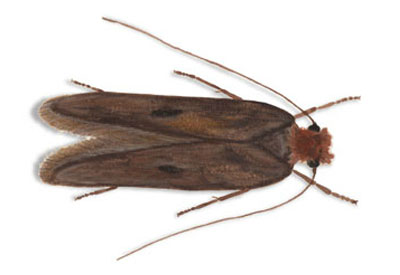
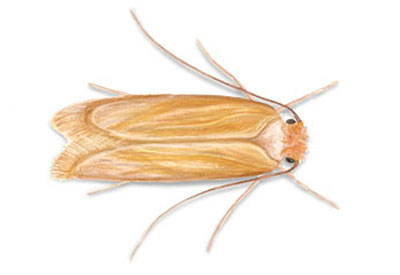
Clothes moth - Moth extermination and control services in Wisconsin by Batzner Pest Control
Casemaking Clothes Moth
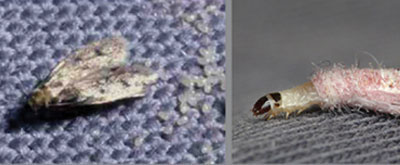
Webbing clothes moth - moth extermination and control services in Wisconsin by Batzner Pest Control
Webbing Clothes Moth
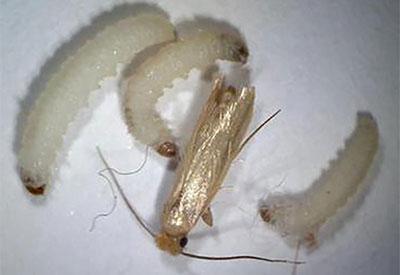
Clothes moth caterpillars - Moth extermination, control, and removal services by Batzner Pest Control in Wisconsin
Clothes Moth Caterpillars

Clothes Moth Diet

Fabric moths tend to target clothing stores, museums, and coat closets, attics, and furniture in homes to feed on wool clothes, natural carpets, furs, stored wool, and piano felts. Case-making clothes moths will also feed on stored plant materials, such as spices and tobacco.

Clothes Moth Habitat

Casemaking clothes moth
Usually protected in a case made of silk and fibers of feeding material.

Webbing clothes moth
Often found in a network of silken tubing. Larvae may be difficult to spot as they hide in a network of silken tubing.

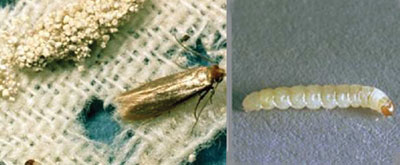
Casemaking clothes moths - Moth extermination services by Batzner Pest Control in Wisconsin

Casemaking Clothes Moth Life Cycle

The female deposits 37-48 eggs singly or in small groups. Hatching occurs in four to seven days. Caterpillar development is complete in 68-87 days, and pupation takes place in the larval feeding case after both ends are sealed. The life cycle is completed within three to eight months, and there are three to four generations per year.

Webbing clothes moth - Moth extermination and control in Wisconsin by Batzner Pest Control

Webbing Clothes Moth Life Cycle

The female lays 40-100 eggs in her lifetime in batches of about 25. Eggs are deposited singly or in batches between threads on cloth surfaces. Hatching occurs in about seven days. Caterpillar development includes 5-45 stages (molts) and can last from 35 days to 2.5 years. Caterpillars make cocoons for pupation. Males live 13-79 days; females 10-48 days. The entire life cycle completion usually takes three to eight months.

Signs of a Clothes Moth Infestation

One of the first signs of a clothes moth infestation is likely to be the telltale holes in clothing, wool carpets, curtains, and furniture. That’s because moths like to lay their eggs in places where the larva will hatch and then devour fabric such as clothing, upholstery, carpeting, and other fabrics. The adult moths do not eat fabric and clothing, but they will reproduce and create more larvae that will.

While the first thing most people notice is the damage caused to clothes, fabrics, or carpets, there are other indicators of a moth infestation:

  • Small maggot-like larvae (moth caterpillars)
  • Silken tubes or cases in which the moth larvae live
  • Pupae (silk cocoons) from which larvae emerge as moths
  • Adult moths often crawling rather than flying
  • Insect debris (droppings and/or silk threads) around the damaged area

Clothes Moth Damage

Fabric pests are usually attracted to natural fabric items such as carpets, tapestries, rugs, leather book bindings, upholstered furniture, silks, and feathered items. Case-making clothes moths do extensive damage to woolens, felts, upholstered furniture, and clothes. Webbing clothes moths damage a variety of animal products, including wool, fur, skins, clothing, carpets, upholstered furniture, and felt.

Rugs

The most common item that gets damaged by fabric pests is wool rugs. As woolen rugs can be expensive, it is strongly recommended you check them frequently for signs of fabric pests.

Woolen Products

In general, untreated woolens stored unprotected in cupboards for several months are more prone to insect damage. Wool textiles infrequent use and regularly washed or dry cleaned are unlikely to suffer damage from fabric pests unless infestations occur nearby.

Knitted Goods

Insect damage to fabrics and fine knitted goods usually takes the form of irregularly shaped holes where yarns have been completely severed and eaten, much like the damage small caterpillars can do to the leaves of plants.

Other Items at Risk

Other items include pillows, mattresses, cushions, and furniture with traditional fillings such as feathers or horsehair. Brushes and paint brushes made with natural bristles and pads and felts in woodwind instruments (especially if stored for long periods of time) may also be found with damage.

Clothes Moth Prevention & Control

Clothes Moth Prevention

To reduce the risks of a clothes moth infestation, follow the steps below:

  • Depending on the species, simply vacuuming regularly can make the home environment unsuitable for the pests.
  • Promptly launder all clothes and fabrics stained with food products or bodily fluids.
  • Additionally, storage bins containing products that moths like to feed on should be carefully cleaned between uses.
Clothes Moth Control

We can help you with our full range of effective solutions to treat infestations and eliminate your moth problem. Our effective treatment is suitable for eliminating moths, eggs, and larvae in delicate items that cannot be laundered.

Prior to recommending a moth control solution, your specialist will properly identify the species affecting your property. Correctly identifying the invading species is key to removal. Different moth pest species require different treatment methods to effectively control them. For the fabric moth pests, vacuuming, sanitation, proper storage, liquid sprays, and dust are commonly used.

  • In the case of fabric moths, dry cleaning the affected garments may effectively kill adults, larvae, and eggs.
  • Where possible, regularly washing fabric items and carefully storing clothes, will also help to keep your items safe from damage.
  • Extreme cold or heat kills any moth species, so freezing or heating food items to do away with stored product moths remains an option.
  • Non-chemical solutions include the simple act of vacuuming. This plays an important role in removing cast skins and eggs, which helps to break the natural life cycle of fabric pests and reduce their population on your property. Ensure your vacuum upholstered furniture and underneath items of furniture, not just carpets, and rugs. Carpet edges next to skirting boards and pet bedding should also be carefully vacuumed. It is important to immediately discard the content of your vacuum cleaner outside of your property.
  • If you intend to store clothing for a long time, you should ensure all items have been washed and are clean. Wrap up items in plastic to keep them safe from fabric pests.

Monitoring using various traps including pheromone traps where applicable is done thereafter to ensure moth problems do not persist.

For unusually persistent infestations of moths, count on a professional pest management service to take care of the problem knowledgeably and successfully.