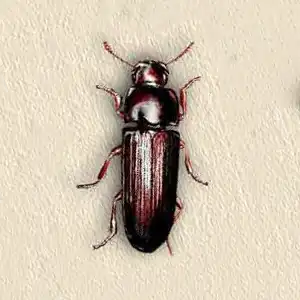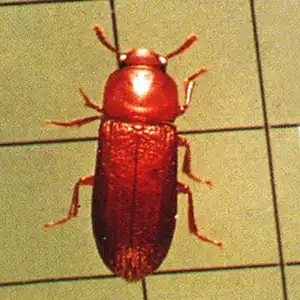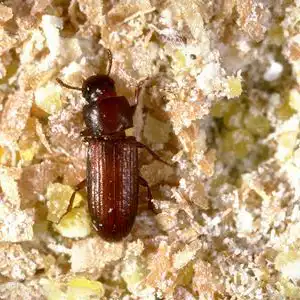
Cigarette Beetle

Cigarette beetle control at Batzner Pest Control in Wisconsin - Serving New Berlin, Green Bay, Milwaukee, Madison, Racine and surrounding areas

Cigarette Beetle Diet

The cigarette beetle feeds off tobacco, dry stored food products, spices, seeds, grains, and dried plant material. They have also been reported in rice, dried potatoes, paprika, raisins, grain-based mouse bait, and dried strawflowers.

Cigarette Beetle Habitat

They prefer to reside in dark or dimly lit cracks, nooks, and crevices. Adult beetles often wander away from infested materials and may be found throughout the area.

Cigarette Beetle Life Cycle

The adult beetles live from two to four weeks and during this time the females may deposit between 10-100 eggs. The eggs are laid loosely on the infested material. The larval period usually ranges from four to five months, but under very favorable conditions the development from egg to adult may occur in six to eight weeks. When the larvae are fully grown, pupation occurs and they remain in this resting stage for 12 to 18 days.

Cigarette Beetle Damage

Larval feeding causes direct damage to food and non-food items. Beetles chew through cardboard boxes, containers, and packaging causing damage. Cocoons are often attached to a solid substrate and in severe infestations form large clusters. Larvae will sometimes bore their way through cardboard boxes and other packaging in search of a place to pupate.

Signs of a Cigarette Beetle Infestation

Even though these stored product pests prefer to feed on tobacco products, they will attack a broad range of food items. Inspection is a must. Look in nearby food products such as pet food, seeds, seasonings, dried fruits, dried fish, ginger, pasta, dry flower arrangements, wreaths, and rodent baits. Use a magnifying glass and flashlight to help with the inspection.

Cigarette Beetle Prevention & Control

Cigarette Beetle Prevention

To prevent infestations, clean up spilled flour, mixes, crumbs, etc., and thoroughly vacuum and clean areas where the contaminated items were stored. Store foods in airtight glass, metal, or plastic containers.

In commercial settings, Integrated Pest Management (IPM) programs are often implemented to control infestations at processing, distribution, and storage facilities.

Cigarette Beetle Control

Locating the source of the infestation is the first and most important step. Heavily infested items should be wrapped in heavy plastic, taken outside, and thrown away. All food containers and items should be checked for infestation. Cigarette beetles migrate to new materials quickly, so a complete inspection is critical. It is also crucial to vacuum and clean shelves thoroughly, paying attention to cracks and crevices and under your shelves, and around wire shelving.

If a cigarette beetle infestation occurs, count on a professional pest management service to take care of the problem knowledgeably and successfully.

Confused Flour Beetle

Confused flour beetle control at Batzner Pest Control in Wisconsin - Serving New Berlin, Green Bay, Milwaukee, Madison, Racine and surrounding areas
Confused flour beetle - Beetle extermination services in Wisconsin by Batzner Pest Control
Confused Flour Beetle
Confused flour beetle - Beetle control and extermination in Wisconsin by Batzner Pest Control
Confused Flour Beetle
Red flour beetle - Beetle extermination, control and removal by Batzner Pest Control in Wisconsin
Red Flour Beetle
Red flour beetle - Beetle control and extermination services in Wisconsin by Batzner Pest Control
Red Flour Beetle

Confused Flour Beetle Diet

Flour beetles feed off-grain, flour, and other cereal products, beans, cacao, cottonseed, shelled nuts, dried fruit, dried vegetables, drugs, spices, chocolate, dried milk, and animal hides.

Confused Flour Beetle Habitat

The confused flour beetle is better suited to temperate climates, while the red flour beetle predominates in subtropical climates.

Confused Flour Beetle Life Cycle

Female lays between 400-500 eggs, which are deposited directly in flour, other food material, or attached to the surface of the container. They are white or colorless and covered by a sticky material to which flour can adhere. Eggs hatch in three to five days and the larvae burrow into kernels of grain but may leave their burrows in search of more favorable food. Adults typically live one to three years.

Confused Flour Beetle Damage

The beetles cause damage by feeding on grains but cause more problems from contamination. Large numbers of dead bodies, cast skins, and fecal pellets produce extremely pungent odors. The nauseous smell and taste caused by infestations result in poor feed consumption by livestock and rejection by grain buyers.

Confused Flour Beetle Prevention & Control

Confused Flour Beetle Prevention

Properly sanitize grain bins before introducing new grain. Good sanitation involves the removal of old grain and dust in and around the grain bin, including removal of old grain from corners, floors, and walls. Any grain remaining when a bin is emptied can harbor insect infestations which will move into the new grain.

Confused Flour Beetle Control

Inspect and Discard: Inspect infested products and discard them. Pay particular attention to dry grains, including flours, milled grains, powdered milk, and cocoa. Inspect each one by one and seal cleared products in air-tight containers.

Clean and Vacuum: Vacuum and clean shelves thoroughly. Pay attention to cracks, crevices, under shelves, and around wire shelving. It doesn’t take a large food source for flour beetles to survive.

If a flour beetle infestation occurs, count on a professional pest management service to take care of the problem knowledgeably and successfully.

Drugstore Beetle

Drugstore beetle control at Batzner Pest Control in Wisconsin - Serving New Berlin, Green Bay, Milwaukee, Madison, Racine and surrounding areas
Drugstore beetle and larvae - Beetle extermination services in Wisconsin by Batzner Pest Control
Drugstore Beetle and Larvae
Drugstore beetle - Beetle extermination, control, and removal services by Batzner Pest Control in Wisconsin
Adult Drugstore Beetle

Drugstore Beetle Diet

Despite being named for their tendency to feed on prescription drugs in pharmacies, the insects are notorious for their willingness to eat anything except cast iron. While they do not favor stored grains, they will attack spices, cereals, pasta, raisins, chocolate seeds, grains, and dried plant material as well as packaging materials such as paper and cardboard. They have also been known to feed on leather, wool, hair, and books.

Drugstore Beetle Habitat

Commonly found in warm climates or heated structures. They customarily infest all types of dry stored food products, spices, seeds, grains, and dried plant material.

Drugstore Beetle Life Cycle

Eggs
Female drugstore beetles lay an average of 75 eggs in her lifetime.

Larvae
The hatching larvae are 0.5 mm long and very mobile. The larval period usually ranges from four to five months, but under favorable conditions, the development from egg to adult may occur in six to eight weeks.

Pupation
When the larvae are fully grown, pupation occurs and they remain in this resting stage for 12 to 18 days. After this time, the insects emerge from their cocoons as sexually mature adults.

Lifespan
On average, adult drugstore beetles live between 13 and 65 days. The precise length of the life cycle depends on the weather and humidity of the surrounding environment.

Drugstore Beetle Damage

The eating habits of the drugstore beetle are the most damaging aspect of the pest. Since so many offspring are produced in a single generation, infestations are capable of contaminating large amounts of stored foods. When the beetles infest commercial warehouses and other storage facilities, they can render products unusable. They are also capable of destroying priceless museum pieces.

Signs of a Drugstore Beetle Infestation

Since the drugstore beetle can fly well, the source of infestation can sometimes be hard to find. Their presence can be detected from pinhead holes in the infested items.

Drugstore Beetle Prevention & Control

Drugstore Beetle Prevention

Sanitation: Preventing an infestation requires good sanitation practices. Clean cabinets and surrounding areas regularly, and take care of spills and crumbs as soon as the mess is made.

Moisture: Ensure cabinets are properly ventilated to avoid moisture build-up.

Exclusion: Purchase insect-proof containers made of inedible plastics and accompanied by secure lids.

Rotate Stock: Rotate food supplies by eating older products and open packages first.

Drugstore Beetle Control

Removing drugstore beetle infestations is fairly simple once the attracting food source is located. Unsalvageable items should be wrapped in heavy plastic and thrown away outside of the home. They cannot withstand freezing or sweltering temperatures, putting the pests in a cold freezer or hot oven is an effective removal strategy; however, infested food items should be discarded.

If a drugstore beetle infestation occurs, count on a professional pest management service to take care of the problem knowledgeably and successfully.

Indian Meal Moth

Indian meal moth control at Batzner Pest Control in Wisconsin - Serving New Berlin, Green Bay, Milwaukee, Madison, Racine and surrounding areas
Indian meal moth larvae - control and removal - Batzner Pest Control in Wisconsin
Indian Meal Moth Larva
Indian meal moth larvae prevention - Batzner Pest Control in Wisconsin
Indian Meal Moth Larva
Indian meal moth control and removal - Batzner Pest Control in Wisconsin
Indian Meal Moth Adult
Indian meal moth prevention and removal services - Batzner Pest Control in Wisconsin
Indian Meal Moth Adult

Indian Meal Moth Diet

Attracted to stored food, ground grains, cereal products, dried herbs, dried fruits, nuts, pet foods, dried flowers, seeds.

Indian Meal Moth Habitat

This insect is found in a wide range of climates in stored products and food storage facilities around the world.

Indian Meal Moth Life Cycle

Eggs
Female moths deposit eggs directly onto grains or similar foods. They lay 100 to 300 eggs at a time, and larvae begin to hatch as early as two days to two weeks after.

Larvae
The larvae then feed on the fine materials within the grain. After anywhere from six to eight weeks, pupation begins. Adults emerge between 15 and 20 days later.

Adults
Adults live between 5 to 25 days.

Life Span
The entire life cycle completes within 40 to 55 days, and seven to nine generations occur in a single year.

Signs of an Indian Meal Moth Infestation

Mold

Look for accumulated mold in potentially infested food sources, as the presence of Indian meal moths can result in an increased potential for water absorption.

Silky Webs

The most telling sign of an Indian meal moth infestation is the existence of silken webs in grains and other stored products.

Feces

May notice accumulations of fecal matter, cast skins, and eggshells in the silken webbing.

Food Weight Change

To grow and develop, Indian meal moth larvae feed on seed germ, which often results in a noticeable reduction in the dry weight of the food product.

Flight

Adult moths flying around indicates an infestation.

Indian Meal Moth Damage

Though the pests do not spread disease or affect the structural integrity of homes, Indian meal moths cause significant damages to stored foods. Both in homes and grocery stores, the insects render a costly amount of product unfit for consumption by humans and pets alike. Indian meal moths frequently travel into homes in infested bags of dried pet food and birdseed. The larval stage is responsible for damage to stored products when they spin massive amounts of silk that accumulate fecal pellets, cast skins, and eggshells in food products. The adult moth causes no damage.

Indian Meal Moth Prevention & Control

Indian Meal Moth Prevention

Proper sanitation is key to preventing infestations of Indian meal moths.

  • Spills: Clean up spills and crumbs, and maintain the cleanliness of homes and buildings.
  • Food containers: Target containers in which grains and similar items are stored by wiping them clean between uses.
  • Inspect food: Examine food products thoroughly before bringing them into the home can help prevent accidental incursions.
  • Seal: Store dried food in airtight containers.
Indian Meal Moth Control

Extreme cold or heat kills any moth species, so freezing or heating food items to do away with stored product moths remains an option. Another effective method is to dispose of any infested products.

If an Indian meal moth infestation occurs, count on a professional pest management service to take care of the problem knowledgeably and successfully.

Sawtoothed Grain Beetle and Merchant Grain Beetle

Sawtooth and merchant grain beetle control at Batzner Pest Control in Wisconsin - Serving New Berlin, Green Bay, Milwaukee, Madison, Racine and surrounding areas
Sawtooth beetle control and removal - Batzner Pest Control in Wisconsin
Sawtooth Grain Beetle
Sawtooth beetle control and prevention - Batzner Pest Control in Wisconsin
Sawtooth Grain Beetle
Sawtooth and merchant grain beetle control at Batzner Pest Control in Wisconsin
Merchant Grain Beetle

Sawtoothed Grain Beetle and Merchant Grain Beetle Diet

Both beetles are pests found feeding in nuts, seeds, biscuits, dried fruit, grain, and various other food products. They can chew through sealed packaging such as cardboard boxes, plastic bags, and foil wrappings.

The larvae develop in flour, cereal products, and many other dried foods, including grains, cereals, bread, pasta products, dried meat, dried fruit and nuts, sugar, chocolate, candy, tobacco products, and drugs.

Sawtoothed Grain Beetle and Merchant Grain Beetle Habitat

A common pest not only in grain bins, but also, mills, processing plants, warehouses, and kitchens.

Life Cycle

Sawtooth Grain Beetle Life Cycle: The female lays eggs singly or in small batches in food products, laying about 200 eggs in her lifetime. When the small, slender, and white eggs hatch after about eight days, the emerging larvae crawl and feed on finely divided food particles. It cannot feed on large particles such as whole grains. Adults usually live around 6 to 10 months.

Merchant Grain Beetle Life Cycle: The females lay about 300 eggs in her lifetime, which are dropped loosely among grain kernels or tucked into a crevice in a kernel. The tiny eggs are slender and white and hatch in three to five days when environmental conditions are optimal. The larvae emerge and crawl freely about the grain to feed on broken kernels. Total development from egg to adult requires about three to four weeks.

Sawtoothed Grain Beetle and Merchant Grain Beetle Damage

Although broken kernels are the preferred food of both species, sound kernels will sometimes be penetrated and fed on. The dry weight of grain may be reduced, but total weight may increase because of water absorption caused by the metabolic processes of insect populations. Molds may begin to grow on the gain, further reducing grain quality and value. The presence of live insects and/or insect parts can also result in a reduction of grain value. In some cases, grain can be rejected.

Sawtoothed Grain Beetle and Merchant Grain Beetle Prevention & Control

Grain Beetles Prevention

Sanitize: Properly sanitize grain bins before introducing new grain. Good sanitation involves the removal of old grain and dust in and around the grain bin, including removal of old grain from corners, floors, and walls. Any grain remaining when a bin is emptied can harbor insect infestations which will move into the new grain.

Vacuum: After inspection and discarding infested items, clean and vacuum cracks and crevices and shelves. Don’t forget to clean and vacuum under the shelves and any wire shelving.

Grain Beetles Control

If a sawtooth or merchant beetle infestation occurs, count on a professional pest management service to take care of the problem knowledgeably and successfully.

Weevils

Weevil control at Batzner Pest Control in Wisconsin - Serving New Berlin, Green Bay, Milwaukee, Madison, Racine and surrounding areas

Granary weevil control and removal - Batzner Pest Control in Wisconsin
Granary Weevil
Rice weevil control and removal - Batzner Pest Control in Wisconsin
Rice Weevil

Weevil Diet

Both larvae and adults feed on grain products including rye, barley, buckwheat, beans, stored cotton, cashews, cereals, pasta, and birdseed.

Weevil Habitat

Most of their life is spent within the grain kernel. Emergence holes of the rice weevil are smaller than those of the granary weevil and tend to be smooth and round. There is generally no external evidence that the larvae have been eating and growing inside the seed until after about one month when the adult weevil chews through the seed coat and emerges.

Weevil Life Cycle

The egg, larva, and pupa stages of weevils occur in the grain kernels and are rarely seen. Females drill a tiny hole in the grain kernel, deposit an egg in the cavity, then plug the hole with a gelatinous secretion. The egg hatches into a young larva which bores toward the center of the kernel, feeds, grows, and pupates there. New adults bore emergence holes from the inside, then leave to mate and begin a new generation. Emergence holes of the granary weevil are fairly large and tend to be more ragged than smooth and round.

Rice Weevil
Female rice weevils lay between 300 and 400 eggs, with the life cycle requiring about 32 days for completion. Two larvae can develop in one wheat kernel.

Granary Weevil
The life cycle is about 30 to 40 days during the summer, and 123 to 148 days during the winter, depending on temperature.

Signs of a Weevil Infestation

There is generally no external evidence that the larvae have been eating and growing inside the seed until after about one month when the adult weevil chews through the seed coat and emerges.

Containers

Look in unsealed food containers, where the presence of warm grains near the surface may indicate a rice weevil problem.

Holes in grain bags

Holes in stored grains may also signal an infestation of weevils.

Heat

Ingrain silos, elevators, and other storage facilities, infested grains may feel heated near the surface.

Moisture

Grains may be damp to the point that molds and fungi start to appear.

Kernels

Damaged kernels may also indicate a weevil infestation as does the sight of recently emerging adults.

Flying

Rice weevils are excellent fliers, though they may fall to the ground and feign death when startled.

Light

Finding the pests near a source of light may also denote a possible infestation.

Weevil Damage

Damage is caused primarily by the larvae but also by the adults. In undisturbed environments with the right conditions, rice weevils can almost completely destroy entire elevators or bins of stored grain. Their ability to fly only exacerbates the problems they cause. The pests develop within the grain itself, leaving behind hollowed-out kernels that can no longer be used.

Weevil Prevention & Control

Weevils Prevention

Storage Bins: Keeping storage bins properly sanitized may be the best way to avoid weevils. Removing all old grain and dust before putting in new items can help cut down on potential incursions. Additionally, any spilled grains should be removed immediately.

Cracks: Treat and seal all cracks, crevices, and other points of entry.

Insecticide: Approved insecticides may be used but only when handled by a knowledgeable individual like a trained pest control professional.

Rotate food: Rotate products with consistency using old food items before new ones to help reduce the risk of a weevil infestation.

Weevils Control
  • Cupboards or shelves holding infested items should be emptied and thoroughly vacuumed, especially the cracks and corners.
  • All products containing or made of whole grains need to be inspected. Discard infested foods in outdoor trash. Infested decorations (flowers, wreaths, etc.) should also be discarded.
  • Store all dried food, including dried pet foods and birdseed, in a glass or plastic container with a tight lid. This will contain the infestation if one is present.
  • Consume older food products prior to newer purchases of the same food. Products purchased in larger quantities (e.g., from a wholesale food warehouse) are more likely to become an infestation source if these are stored for long periods of time – especially if they are not stored in containers with tight-fitting lids.

As weevils reproduce inside of grains, the cost of trying to eradicate an infestation without professional assistance may end up being as high as the cost of losing the stored product itself.

If a weevil infestation occurs, count on a professional pest management service to take care of the problem knowledgeably and successfully.

House Mouse

House mouse identification from Batzner Pest Control in Wisconsin - Serving New Berlin, Green Bay, Milwaukee, Madison, Racine and surrounding areas

House Mice in Wisconsin

House mice can squeeze through dime-sized cracks to gain entry into homes and buildings. House mouse fur varies in color from light brown to black, while the underbelly typically appears beige. Interestingly, the closer a house mouse lives in relation to humans, the darker the fur becomes. House mice nibble on small amounts of food, eating at dusk and before dawn. They are omnivores with a diet focused on seeds, roots, leaves, and stems. Female house mice can produce between 5 and 10 litters per year, with each litter containing anywhere from 5 to 12 young. They are dependent upon human activity for shelter and survival, which is why they are such a common household pest.

House Mouse Habitat

House mice thrive in various environments and are found in and around both homes and businesses, making their homes in wall voids, storage boxes, attics, barns, sheds, basements, crawl spaces, cabinets, warehouses, and many other similar locations. During the fall and winter months, the colder temperatures drive these mice indoors, seeking shelter. House mice prefer to nest in dark, secluded areas and often build nests out of paper products, cotton, packing materials, wall insulation, and fabrics. House mice are nocturnal, but they can be spotted during the day.

House Mouse Habits & Dangers

The house mouse is omnivorous but prefers grains and cereals. House mice contaminate food and are implicated in the transmission of diseases such as salmonella and bubonic plague. The house mouse can cause significant damage to structures by gnawing and tunneling through walls. Mice have also been implicated in the generation of fires and explosions in homes and buildings. Chewed, exposed wires inside walls can spark, causing interior walls to catch fire.

If you have a house mouse infestation in your Wisconsin property, contact your local rodent control experts!

Norway Rat

Norway rat identification from Batzner Pest Control in Wisconsin - Serving New Berlin, Green Bay, Milwaukee, Madison, Racine and surrounding areas

Norway Rats in Wisconsin

Norway rats are color-blind, but aside from their vision, their senses are keen (touch with long whiskers). They are nocturnal and can run, climb, jump, swim, and more. Norway rats will eat nearly any type of food, but if given a choice, they select fresh food over stale or contaminated foods. They prefer cereal grains, meats and fish, nuts, and fruit. Food items in household garbage offer a balanced diet and also satisfy their moisture needs. When food sources become scarce, Norway rats may resort to cannibalism and prey on younger, weaker rats. In general, the rodents are opportunistic and feed on anything discovered while foraging. They also are known to be more aggressive than other types of rats.

Norway Rat Habitat

Norway rats prefer to live in underground tunnels or burrows. Inside, they are often found in crawl spaces, basements, attics, or ceiling areas. Burrows of new, establishing rat populations are between 12-20 inches long. As the population grows, the burrows are enlarged and connect with other burrows to form a network of underground tunnels. Ground burrows usually have one central opening used for an entrance or exit and a couple of holes used for escaping. As the rat population increases and if food or water sources are limited, fighting will begin to defend territories. Dominant rats feed at night and are mostly nocturnal. The rats lower in rank are forced to reside in a section of the burrow further from food or water sources. They will feed and be active when the dominant rats are not active. Seeing rats active during the daytime often indicates a large population.

Norway Rat Habits & Dangers

By foraging persistently and gnawing on objects repeatedly, Norway rats cause damage to food, crops, and structures. Furthermore, the rodents engage in burrowing activities, which may lead to damage to gardens and landscaping. Historically, these rodents inspired horror and were largely responsible for spreading the bubonic plague in the 1300s. Also called the Black Death, the plague wiped out vast numbers of the world population. Though rats do not facilitate the same level of devastation today, the pests regularly carry pathogens for other harmful diseases.

If you have a Norway rats infestation in your Wisconsin property, contact your local rodent control experts!

Shrew

Shrew control at Batzner Pest Control in Wisconsin - Serving New Berlin, Green Bay, Milwaukee, Madison, Racine and surrounding areas

Shrews in Wisconsin

Shrews are among the world’s smallest mammals. Worldwide, there are over 250 species recognized, with over 30 species identified in the United States. Shrews primarily feed on insects, earthworms, slugs, and spiders and will also feed on small animals, seeds, roots, and other vegetable matter. Because of their small size, shrews lose body heat rapidly. In order to maintain constant body temperature, they have a high metabolic rate and consume food every three to four hours. In a 24-hour period, some species of shrews will consume three times their body weight. Typically shrews are born, live, and die within a year, but some may live just under two years.

Shrew Habitat

A shrew’s habitat depends on the species, but they are typically near structures, occasionally invading buildings. Often reusing tunnels made by moles and voles, they live in gardens and wooded areas where food supplies are abundant. They prefer to live in fields, marshy areas, and forests—wherever there is leaf litter or thick plant cover.

Shrew Habits & Dangers

Shrews do not have a considerable negative impact on humans and go about their lives unnoticed by most people. They occasionally become a nuisance when they live in close proximity to humans because of their aggressive nature. Shrews occasionally fall into window wells, attack pets, feed on stored foods, contaminate stored foods with feces and urine, and bite humans when improperly handled.

Due to their hostile nature and ability to move fast, shrews are difficult to get rid of. Contacting a pest control professional is the ideal way to resolve a shrew problem. Always contact your local nuisance wildlife experts for assistance with shrews.

Vole

Vole identification and information from Batzner Pest Control in Wisconsin - Serving New Berlin, Green Bay, Milwaukee, Madison, Racine and surrounding areas

Voles in Wisconsin

Voles are poor climbers and usually do not enter homes or other buildings. Instead, they inhabit grasslands or croplands adjacent to buildings or gardens and landscaped sites with protective ground cover. Problems around homes, buildings, and gardens occur with populations that increase quickly. Voles are usually herbivores, preferring to eat plants, roots, bark, seeds, grains, nuts, and fruit, but are opportunistic and will also eat dead mice and other rodents. They end up doing the most damage to gardens and crops. Voles chew at the roots of plants, so if you see dead and drooping plants around your garden, you might have voles.

Vole Habitat

Voles can be found in dense, grassy fields, gardens, meadows, woodlands, along lakes and rivers, and in agricultural areas. Habitat selection is largely influenced by the relative ground cover of grasses. They make their nests in underground burrows and form their nests, voles create extensive tunnels beneath the soil surface in their endless search for food.

Vole Behaviors, Threats, or Dangers

They create very short burrows, but they connect them to each other via runways. This creates a network of tunnels spread out across the lawn and yard. Voles burrow underground to find food and will devour bulbs in your garden. They also are known to damage trees and vegetable plants. If voles gnaw on the bark located low to the ground or devour the roots, the tree’s flow of nutrients and water will be disrupted and the tree may die. If the damage is below ground, you will need to remove soil from the base of the tree to see it. Although voles are poor climbers, if they can climb onto low-hanging branches, they can cause damage higher up on trees as well.

If you have a vole infestation in your Wisconsin property, always contact a licensed rodent control company.