Bald-Faced Hornet

Baldfaced hornet control at Batzner Pest Control in Wisconsin - Serving New Berlin, Green Bay, Milwaukee, Madison, Racine and surrounding areas

Bald-Faced Hornets in Wisconsin

Bald-faced hornets look similar to yellow jackets, but instead of yellow, they have white to cream-colored markings. Bald-faced hornets are relatively large flying insects and will defend their nests aggressively when they feel there is a threat. These beneficial wasps live in colonies with thousands of individuals and would be a lesser threat to humans if they did not nest in structural voids, attics, and cavities associated with landscaping features.

Bald-Faced Hornet Habitat & Nests

Nests are usually attached to a tree branch located in bushes, shrubbery, or a wooded area. However, they can also be attached to utility poles or under the eaves of houses, sheds, or other structures that provide protection. Nests will be at least three feet off the ground and as high as 60 feet or more. They are made of chewed wood fibers mixed with saliva, creating a gray-colored, paper-like material. Reaching up to 24″ in height and 18″ across, there is a single opening at the bottom to allow the hornets to fly in and out. Bald-faced hornet nests are built from scratch each year and the previous year’s nest cannot be reused.

Bald-Faced Hornets Behaviors & Threats

Even though bald-faced hornets are beneficial by preying on other pests, they are extremely aggressive and will attack anyone or anything that invades their space.  The sting of a baldfaced hornet carries venom causing stings to hurt, itch and swell for about 24 hours. Because these hornets have smooth stingers, they can sting over and over again, whereas other stinging insects, like honey bees, are only able to attack once before their stinger falls off. Of course, as with all other insect stings, humans are at risk for allergic reactions.

If you find a bald-faced hornet nest on your home or property, do not attempt to remove it on your own as this can aggravate the colony and cause the hornets to sting. Nests should not be handled without the assistance of a pest control company.

Bumblebee

Bumble bee control at Batzner Pest Control in Wisconsin - Serving New Berlin, Green Bay, Milwaukee, Madison, Racine and surrounding areas

Bumblebees in Wisconsin

There are more than 255 species of bumblebees worldwide. Bumblebees are large and robust insects covered with densely branched setae (hairs). They have short stubby wings and are beneficial as pollinators for many kinds of crops and ornamentals. Their wings beat 130 times or more per second according to the National Wildlife Federation. The beating combined with their large bodies vibrates flowers until they release pollen, which is called buzz pollination. This helps plants produce more fruit. The only bumblebees to survive winter are the queens. They hibernate in the soil in a location that will not warm up too quickly or too early in the spring (to avoid a potentially lethal early emergence). After emerging from an overwintering site, alone queen seeks out a suitable site to begin a new colony.

Bumblebee Habitats & Nests

Most bumblebees construct nests made of mud or clay in dry, dark underground tunnels made by other animals, such as old rodent burrows. Some bumblebees nest above ground in rock or tree crevices, around patio areas or decks, under porches, or in the eaves of roofs. They will build in any dry, protected area they find. Colonies are typically 50 to 400 bees with one dominant queen bee. Bumblebees are able to work in cooler weather.

Bumblebee Behaviors & Dangers

Since their stinger is smooth, bumblebee workers and the queens can sting more than once. Male bumblebees, on the other hand, cannot sting at all since they do not have a stinger. As part of the aggressive defense of their nests, bumble bees will chase invaders for a considerable distance. The bumblebee sting is considered to be one of the most painful.

If you are dealing with a bumblebee problem, always contact your local bee control experts.

Carpenter Bee

graphic that shows what a carpenter bee actually looks like

Carpenter Bees in Wisconsin

Though carpenter bees, as their name would suggest, are commonly found in and around wood, the insects do not actually eat the timber. Like most bee species, carpenter bees forage on flowering plants, feeding on nectar. This is how the females collect pollen for their offspring. In contrast to the social tendencies of bumble and honey bees, carpenter bees lead solitary lives, as each female individually mates with a male to produce offspring. Mating takes place during the spring, and females then set to work cleaning out and enlarging tunnels left by earlier generations or excavate new ones in exposed, dry wood.

Carpenter Bee Habitat & Nests

Carpenter bees do not live in nests or colonies. Adult carpenter bees overwinter in abandoned nest tunnels where they have stored limited pollen to survive the colder temperatures. The bees that survive the winter will emerge in the spring to feed on nectar, mate, and build galleries. They may reuse an already existing gallery or they may excavate new galleries. Carpenter bee nests can often be found in decks, eaves, fascia boards, doors, railings, window trim, and other wooden surfaces. They prefer the wood from redwood, cedar, pine, and cypress trees and target wood that is unpainted, untreated, and weathered. However, they occasionally target painted and primed wood as well.

The tunnels they excavate into wooden surfaces are only for nurturing their eggs and young. Nests usually consist of tunnels half of an inch in diameter and 6-10″ deep and may include several brood chambers. Carpenter bees may buzz like saws when constructing nests (hence their name), but they do not eat the wood, as they cannot digest cellulose.

Carpenter Bee Behaviors & Threats

Female carpenter bees can sting in defense if provoked, but males, which may appear a bit more aggressive and territorial, cannot sting. It may be surprising to learn that this is one of the least aggressive stinging insects encountered in the summer months. Carpenter bees are considered pests because they drill holes in wooden structures; however, their contribution to pollination far outweighs any damage to structures. In general, carpenter bees do not pose much of a problem for homes and businesses, but generations of carpenter bees tunneling into the same wood can lead to significant structural damage. The carpenter bee produces broods that return to the same nest location to begin additional nests, creating trouble for those structures and homes with an infestation. Additionally, the larvae developing in homes are attractive to woodpeckers and create more extensive damage to the existing holes while creating unwanted noise.

If you have a carpenter bee problem forming in or near your property, always contact your local bee control company.

European Hornet

european hornet identification in Wisconsin - New Berlin, Green Bay, Milwaukee, Madison, Racine and surrounding areas

European Hornets in Wisconsin

The European hornet, also known as the brown or giant hornet, gets its common name from being introduced to the eastern United States from Europe in the mid-1800s. These hornets are found in 30 states, from the eastern U.S. as far west as Louisiana and the Dakotas. European hornets are much larger than yellowjackets, and unlike most stinging insects, can be active at night. Adults, possibly seeking prey, come to lights in the evening and can be a source of great concern for homeowners.

European Hornet Habitat & Nests

European hornets’ nest in hollow trees, barns, outbuildings, hollow walls of houses, attics, and abandoned beehives. Their nests will rarely appear freely suspended like the football-shaped bald-faced hornet nests. Nests that are not covered by an external structure have a brown paper envelope made of cellulose from decayed wood covering the nest. This feature distinguishes this species from large yellow jackets. Nests that are sheltered have little or no envelope covering their cells. Nests often have a foul odor, and when they are built-in attics, they can extend into living spaces. A mature nest has about 1,000 workers.

European Hornet Behaviors & Dangers

Although large and fierce-looking, European hornets will not sting unless threatened and tend to leave people alone. However, this hornet is capable of stinging multiple times, and those that may be allergic to their venom should seek medical attention when stung. European hornets can cause issues for homeowners by nesting in barns, hollow trees in yards, wall voids, or attics. When food becomes scarce in late summer, they look for sugary foods and may destroy fruit trees. These hornets are attracted to porch lights at night and will sometimes bang up against windows, causing many a distressed homeowner.

If you notice a European hornet problem forming near your Wisconsin property, always contact your local hornet removal company.

Deer Ticks and American Dog Ticks

Deer tick and American dog tick control at Batzner Pest Control in Wisconsin - Serving New Berlin, Green Bay, Milwaukee, Madison, Racine and surrounding areas
American Dog Tick and Deer Tick control and extermination services in Wisconsin by Batzner Pest Control
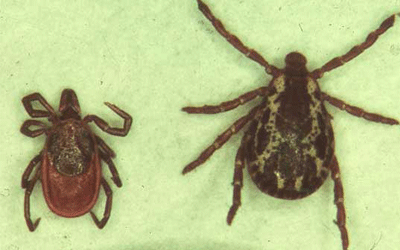
Deer Tick (left), American Dog Tick (right)
Feeding tick - Tick extermination services in Wisconsin by Batzner Pest Control
Feeding Tick
Engorged tick - Tick extermination and control by Batzner Pest Control in Wisconsin
Engorged Tick
Tick nymph - Tick control and extermination services in Wisconsin by Batzner Pest Control
Tick Nymph
Adult deer tick - Tick extermination, control, and removal by Batzner Pest Control in Wisconsin
Adult Deer Tick
Adult Deer Tick - Wisconsin tick removal by Batzner Pest Control
Adult Deer Tick

Tick Diet

Deer Ticks
Deer ticks feed on birds and small and large mammals, from deer mice to humans. Adults attach to white-tail deer for overwintering and do not move from host to host. Adults are not responsible for the transmission of Lyme disease.

American Dog Ticks
Immature American dog ticks feed on mice and voles. The adults feed on dogs and other large animals, including humans.

Tick Habitat

Ticks are found in areas with dense foliage that allows ticks to perch, such as grassy areas, woodlands, and along hiking trails. Lawns with unkempt grass, damp leaf litter, and overgrown bushes provide environments for ticks to thrive. They generally perch on the tips of long blades of grass or shrubs with their forelegs outstretched. When an animal brushes past them, they let go of the plant and climb onto the host to feed. Since they also live on animal hosts, ticks can be found wherever mice, deer, and squirrels are abundant.

Life Cycle

Deer Tick
In the spring, engorged females drop off the host animal and lay 3,000 eggs in a protected area. The eggs hatch in 48-135 days. In June through September, the larva seeks and feeds on small rodents. After molting to the nymph stage, the ticks once again seek hosts to feed. Engorged nymphs molt to the adult stage, and feed on deer.

American Dog Tick
In June or July, the engorged female tick drops off the host animal and lays 4,000-6,500 yellow-brown eggs in a sheltered location which hatch in 36-57 days. The larva seeks rodents and other small animals for its blood meal. After molting to the nymph stage, the tick once again seeks hosts. The engorged nymphs molt to the adult stage which usually feeds on dogs and other large mammals. Development from egg to adult can be completed in three months, but each stage is remarkably resistant to starvation and the life cycle can be prolonged for up to two years. Unfed adults can live for two to three years.

Tick Disease Transmission

The American dog tick transmits Rocky Mountain Spotted Fever and can cause tick-induced paralysis if it attaches near the base of the neck. The deer tick nymph is responsible for the transmission of Lyme disease, the most significant tick-borne disease within the United States.

Tick Prevention & Control

Tick Prevention
  • Keep lawns mowed short and bushes trimmed.
  • Take steps to ensure that common carriers of ticks, such as mice and deer, are not attracted to private properties.
  • Clean up debris and keep piles of logs or brush away from homes.
  • Clean up spilled birdseed and pet food that attracts common tick carriers.
  • Secure garbage bins so that wild animals do not have access to easy sources of food.
  • Wear light-colored clothing; tucking pant legs into socks, shirts into pants.
  • When hiking, walk in the center of the trail to avoid overhanging grasses, weeds, and brush.
  • Use tick repellent. Clothing repellents are generally better against ticks than skin repellents; however, using skin repellents is also beneficial.
  • After returning from a hike or time outdoors, thoroughly inspect yourself and your pets. Since some ticks that may get on the body are very small, it is wise to have someone help you inspect for ticks. Don’t forget to check your clothing.
  • Even if you don’t find ticks on your clothes, it is a good idea to immediately wash clothing in hot, soapy water and dry at the highest heat setting for about one hour. If you do not immediately launder and dry the clothes, place them into a clear, plastic bag prior to washing and laundering. After laundering, throw the empty bag into the outside trash container. If you find a tick in the process of feeding, remove it carefully, taking care not to puncture or squeeze the tick’s body.
Tick Control

If a tick is found in the skin:

  • Use fine-tipped tweezers to grasp the tick firmly by the head and pull directly upward with steady, even force.
  • Avoid twisting or squeezing the tick, which can puncture the tick’s body, because its body fluids may contain infectious organisms.
  • After removing the tick, wash and disinfect the site and wash both hands thoroughly.
  • Save the tick in a small, sealed vial or jar for later reference in case an illness develops.

If a tick is found indoors: Vacuum them up.

If a tick is found outdoors: Debris and ground cover around the area should be removed to discourage rodents and other small animal activity.

Professional Tick Treatment: A Batzner Service Specialist will identify the source of the ticks at your property and determine the proper treatment method – the interior or yard. Once treatment is applied, it may take up to three weeks for ticks to disappear. Preventative exterior treatment is also available to deter ticks from coming indoors.

Cricket

Cricket control at Batzner Pest Control in Wisconsin - Serving New Berlin, Green Bay, Milwaukee, Madison, Racine and surrounding areas

Types of Crickets

Camel Crickets – Camel crickets owe their namesake to the humpback appearance. Adult camel crickets are commonly encountered indoors near moist areas like basements or near drainage pipes. The wingless adults can grow to over an inch in length and are known to damage fabrics.

House Crickets – House crickets are particularly skilled at surviving in residential homes and can spend their entire life inside a property. The nocturnal creatures are yellow and brown in color and have wings. House crickets are attracted to lights and can be seen swarming around exterior lighting.

Field Crickets – Field crickets are very common. A female field cricket can lay up to four hundred eggs. Field crickets will swarm when nymphs reach adulthood and fly off to mate. Swarms of field crickets can become problems for businesses when they swarm around buildings and become a nuisance to customers and employees.

Mole Crickets – Mole crickets are a concern for both homeowners and businesses as they are known to damage lawns and landscaping. Particularly proficient at digging, mole crickets will damage plants both by feeding on them and digging tunnels beneath the soil. Once mole crickets infest an area, predators like raccoons may be attracted to that area and dig up more holes in order to feed on the crickets.

Cricket Diet

Crickets are omnivorous insects that feed on a variety of different foods such as fruits, nectar, seeds, decaying organic materials, fungi, and seedling plants. Crickets have also been known to consume dead or weakened insects, including other crickets.

Cricket Habitat

Both house crickets and field crickets are found in tall grass, mulch piles, weeds, rock piles, and logs in the wild.

Cricket Life Cycle

Eggs
The mated females deposit their eggs in moist soil using a digging structure known as the ovipositor. Eggs are laid in groups of 50, with each female capable of laying up to 400 eggs in her lifetime. After a month, the eggs hatch into nymphs that look like adults without wings.

Nymphs
Nymphs pass through a simple metamorphosis and reach adulthood in 12 weeks.

Lifespan
The average lifespan of a cricket lasts between one week and three months.

Cricket Damage & Signs of Infestation

The field cricket and house cricket are not usually considered to be serious household pests, but they may feed on fabrics such as cotton, linen, silk, and wool, causing damage that can be severe, especially in cases of large infestations. Crickets tend to favor materials soiled by food or perspiration. On rare occasions, the pests may feed on crops and stored food, as well.

Trash

Crickets can frequently be found near garbage receptacles.

Moisture & Darkness

Crickets prefer darkness and areas of high moisture, which makes basements, crawlspaces, and even bathrooms attractive to insects.

Sound

The sound of males “singing” to attract a mate regularly signals the presence of the pests inside the home.

Lighting

Outdoors, crickets are often attracted to electrical lights, which may lead to accidental entry into homes and other structures.

Cricket Prevention & Control

Cricket Prevention

To prevent a cricket infestation, steps must be taken to discourage the pests from entering buildings in the first place.

  • Leaks: As crickets are attracted to moist areas, fix all leaking pipes, direct runoff away from the home, and set up dehumidifiers in rooms that tend to accumulate excessive moisture such as crawlspaces and basements.
  • Moisture: Keep areas dry and free of moisture, reducing humidity with a dehumidifier. Allow air to flow, keeping moisture, and pests out.
  • Cracks: Seal off all cracks in building foundations and caulk areas around window sills and door jams to prevent accidental entry.
  • Windows: Repair all torn window and door screens.
  • Clean: Keep dark areas of the basement clean and clutter-free.
  • Vegetation: Remove damp firewood, leaves, and excess vegetation from the perimeter.
  • Nesting: Move wood, stone, and brick piles away from the house.
  • Light: Eliminate attractant light sources.
Cricket Control

The short lifespan of crickets works in favor of homeowners, as the insects may not live long once they get inside the house. Sticky traps and other store-bought baits may work to draw crickets out and help control smaller infestations.

If a large cricket infestation occurs, count on a professional pest management service to take care of the problem knowledgeably and successfully.

What is the Difference Between Crickets and Grasshoppers?

  • The main difference between a grasshopper and cricket is that crickets tend to have long antennae, grasshoppers have short antennae.
  • Crickets sing by rubbing their wings together, while grasshoppers sing by rubbing their long hind legs against their wings.
  • Grasshoppers detect sound by means of little ‘ears’ at the base of their abdomen; in crickets, these are on the front legs.
  • Most crickets come out at dusk whereas grasshoppers tend to be out and about during the day.
  • Grasshoppers mostly eat grass, but crickets are partial to the animal matter as well.

Phorid Fly

Phorid fly control at Batzner Pest Control in Wisconsin - Serving New Berlin, Green Bay, Milwaukee, Madison, Racine and surrounding areas
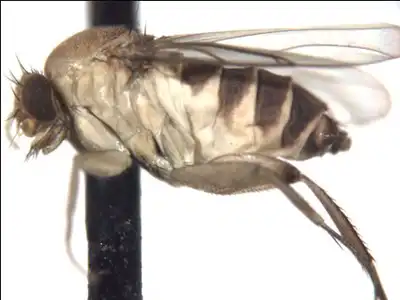
Phorid fly control and extermination in Wisconsin by Batzner Pest Control

    Phorid fly exterminators in Wisconsin - Batzner Pest Control

Phorid Fly Diet

Feeds on decaying plant and animal matter, including sewage and household organic waste.

Phorid Fly Habitat

Outdoors, and are typically associated with dead animals and heavily decaying vegetation. Indoors, they may be found breeding in drains, trash containers, dumpsters, rotting produce, recycle bins, grease traps, garbage disposals, crawlspaces, and any site where moist organic matter can accumulate for a few days or longer. Phorid flies are common in homes and commercial facilities where food is prepared and served, but they are also a key pest in food warehouses and hospitals.

Phorid Fly Life Cycle

Phorid flies are capable of breeding in more types of materials than any other structure-infesting flies. The reproductive potential of these flies is tremendous and very large numbers of them may appear in a short time. Eggs usually are laid at the edge of the substrate, and females lay eggs for about 30 days. The total number of eggs laid is about 600, but it can be as many as 1000. Hatching occurs in about 24 hours and larval development is completed in about three days. The total development time is 13 days.

Phorid Fly Health Concerns

Because these flies frequent unsanitary conditions, they are a health concern when they occur in food facilities and hospitals.

Phorid Fly Control

The key to controlling phorid fly infestations is to locate and eliminate the breeding source. Although there are several sprays and traps used to kill flies, infestations in homes, restaurants, or other structures cannot be eliminated without removing the breeding source. If a drain that is a breeding ground is located, a pest control professional should use a foaming drain cleaner to destroy the film in which the eggs are laid and larvae are developing.

Moth and Drain Flies

Moth and drain fly control at Batzner Pest Control in Wisconsin - Serving New Berlin, Green Bay, Milwaukee, Madison, Racine and surrounding areas

Drain fly extermination and control in Wisconsin by Batzner Pest Control
Drain fly control and extermination services by Batzner Pest Control in Wisconsin

Moth and Drain Flies Diet

The larval and pupal stages feed on algae, fungi, bacteria, and sludge. Since the adults lack the mouthparts necessary for chewing and ingesting solid foods, they feed on liquefied carbohydrates such as nectar.

Moth and Drain Flies Habitat

As their name suggests, drain flies are commonly found in clogged drains and in the organic material in drains and sinks, usually in kitchens and bathrooms. The insects breed and spend the early stages of their life cycle in the organic residue attached to the walls of drains. They may also breed in dirty garbage containers or septic tanks.

Adults are poor fliers and after emergence from drains, they are found in great numbers crawling or resting on walls or flying weakly near the breeding site. Adults are more active at night and can be seen hovering near the breeding site. During the day, they rest on vertical surfaces indoors and in shady, protect areas near water outside. Clogged gutters, storm drains, and birdbaths (where decomposing organic matter accumulates) make ideal outdoor habitats for drain flies.

Moth and Drain Flies Life Cycle

Drain flies breed and lay 30 to 100 eggs in decaying organic material, which after hatching, the larvae rely on for a food source. The drain/moth flies spend about two weeks as larvae before pupating. The pupal stage lasts about a day and a half, with drain flies emerging as adults upon completion. The developmental time from egg to adult is one to four weeks. Adults typically live for an additional two weeks.

Moth and Drain Flies Damage & Signs of Infestation

The presence of drain/moth flies generally becomes an annoyance when they breed in the liquids found in drains, dirty garbage containers, and septic tanks. Drain flies can cause serious infestation problems when an indoor breeding site is overlooked and permitted to endure. When drain flies increase in numbers indoors, unsightly congregations of insects often appear around bathtubs, sinks, floor drains, light fixtures, and windows. Though not typically known as transmitters of disease, drain flies breed in unsanitary conditions and have the potential to transfer the bacteria and microorganisms found in drains to other household surfaces and food. Commercially, they are a problem when they breed in large numbers in the filter beds of sewage-treatment plants.

Moth and Drain Flies Prevention & Control

Moth & Drain Flies Prevention

Preventing a drain fly infestation primarily involves eliminating the environments in which the insects like to breed. Since drain flies breed in areas with excess moisture and residual organic debris, the following drains should be regularly cleaned:

  • Bathtubs
  • Sinks
  • Toilets
  • Basement and garage floors

Clogged gutters and damaged septic lines should also be promptly addressed.

Moth & Drain Flies Control

A Batzner Service Specialist will determine and remove the source of breeding to eliminate infestations. Drains will be cleaned and properly treated to reduce future populations. Eliminating the moisture source that sustains them is also an important control method. Outdoors, they can be controlled by doing the following:

  • Remove harborage areas and storing items off the ground, including debris and rotting wood
  • Remove particles of food and concentrations of dust and lint that could serve as a food source
  • Seal and caulk gaps and entry points into buildings around siding, windows, doors, pipes, and wires
  • Avoid overwatering gardens and plants.

If a moth or drain fly infestation becomes too severe, count on a professional pest management service to take care of the problem knowledgeably and successfully.

Midge Fly

Midge control at Batzner Pest Control in Wisconsin - Serving New Berlin, Green Bay, Milwaukee, Madison, Racine and surrounding areas

Midge Fly Diet

The larvae consume decaying organic matter in water. The adults do not feed.

Midge Fly Habitat

Midges can be found along the edges of any body of water, lakes, and ponds often seeing huge congregations. Swarms of these delicate flies are common in spring and fall. Due to their poor flying ability, winds often blow them into yards where they are considered a nuisance. They may take shelter under soffits, eaves, or covered patios and are often attracted to artificial lights at night.

Midge Fly Life Cycle

Eggs are laid on the surface of the water, only to sink to the bottom where they hatch in less than a week. After hatching, larvae burrow into the mud or construct small tubes in which they live and enlarge as they grow. Organic matter in the water and mud is used as food by the developing larvae. As they grow, the larvae take on a pink color and gradually turn a dark red. The larval stage can take two to seven weeks depending on water temperature. While still in their tubes, larvae transform into pupae. After three days, pupae swim to the surface, and adults emerge several hours later. Adults mate in swarms soon after emerging. Adults do not need to feed and only live for three to five days.

Midge Fly Prevention & Control

Nutrient Reduction

Dense larval populations usually occur in nutrient-rich habitats. Fertilizer run-off from residential lawns and gardens, golf courses, and agricultural fields are sometimes responsible for the development of nuisance populations of midges.

Drain Bodies of Water

When possible, draining lakes and reservoirs with mud bottoms during winter months will kill over-wintering midge larvae, reducing the size of the adult population emerging in spring.

Diversion of Adults

High-intensity white light has been found to be highly attractive to adults. Reduce or eliminate exterior lighting by closing window blinds and turning porch lights off during heavy emergence periods to help reduce the number of adults attracted to residences and buildings.

Boxelder Bug

Boxelder bug control at Batzner Pest Control in Wisconsin - Serving New Berlin, Green Bay, Milwaukee, Madison, Racine and surrounding areas
Boxelder Nymph - Boxelder bug extermination services in Wisconsin by Batzner Pest Control
Boxelder Nymph
Boxelder Nymphs - Boxelder extermination, control and removal by Batzner Pest Control in Wisconsin
Boxelder Nymphs
Boxelder Adults - Boxelder bug extermination and prevention services by Batzner Pest Control in Wisconsin
Boxelder Adults
Boxelder Bug Adults - Boxelder extermination services provided by Batzner Pest Control - Serving Wisconsin
Boxelder Adults

Boxelders in Wisconsin

The boxelder bug frequently becomes a nuisance pest around homes and buildings near boxelder trees. In heavily infested areas, they sometimes are associated with ash and maple trees.

Boxelder Bug Diet

Named for their primary plant host, the boxelder tree, boxelder bugs feed on a variety of plant life, including boxelder tree seeds, boxelder tree fruits, plants, maple trees, apples, pears, peaches, strawberries.

Boxelder Bug Habitat

Mainly a nuisance pest to homeowners, the insect becomes an irritant by attempting to overwinter in man-made structures. Overwintering occurs in large numbers around building foundations and ground-floor windows. They gather on the south and west sides of buildings when the sun heats exposed surfaces. Even though they regularly seek shelter indoors during the colder months, boxelder’s will not reproduce or feed inside human habitations, despite the common fears of homeowners.

Boxelder Bug Life Cycle

Between April and May, the bugs emerge from hibernation. Around the same time, the buds on boxelder trees begin opening, and the insects fly back to host trees where they remain active over the growing season.

Eggs
Eggs are typically laid in the cracks and crevices of boxelder tree bark in the spring.

Nymphs
After hatching, the emergent box elder nymphs feed on foliage and seeds by inserting their piercing-sucking mouthparts into the tissue of the seeds of the tree. The developing insects pass through five instars before fully maturing, with two separate generations usually produced each year.

Boxelder Bug Damage

  • Nuisance: Though boxelder bugs do not bite, cause structural damage, or eat human foods when overwintering indoors, the mere presence of the insects may become a nuisance to homeowners.
  • Stains: If squished, the boxelder bug may leave an unsightly stain.
  • Plants: The feeding habits rarely result in significant damage to the host plant, though larger infestations may become more noticeable as they feed large amounts of food.

Signs of an Infestation

Warmth

Look for boxelder bugs congregating on south-facing walls with direct sunlight in search of heat as the months get colder. When looking for heat, the boxelder bug may enter homes as the weather worsens.

Openings

Indoors, the pests are often seen around windows and doors.

Boxelder Trees

Boxelder trees on the property will attract insects.

Boxelder Bug Prevention & Control

Boxelder Bug Prevention

The best course of action to stop boxelder’s from entering the home is to take preventative measures. This includes:

  • Covering vents
  • Repairing window and door screens
  • Caulking openings in the foundation and around plumbing, electrical conduits, and windows
  • Wood piles, overgrown plants, and mulch placed too close to the home may provide hiding places for the pests
Boxelder Bug Control

DIY Control

  • Don’t crush them! Avoid stepping on or squashing the boxelder bug, as the insect may stain carpets, other fabrics, or walls.
  • Vacuum! Simply vacuuming the insect up may prove effective.
  • Prevention is the key, so caulk and close up window and door frame gaps, and any other openings into the building.

Professional Pest Control

Your Batzner Service Specialist will come to your property to identify the source of the boxelder bugs and determine the proper treatment method. Fall is the time to help prevent boxelder bugs from using your building or home as a refuge for the coming winter season. With the onset of cooler temperatures in autumn, these insects congregate on buildings in search of overwintering sites. To prevent pest entry, treatment must be applied before the insects begin to enter buildings during late September or early October to be effective. Once the pests have entered the building, treatments can be done in winter or spring. The most effective pest management option is prevention. Prevention is the key!